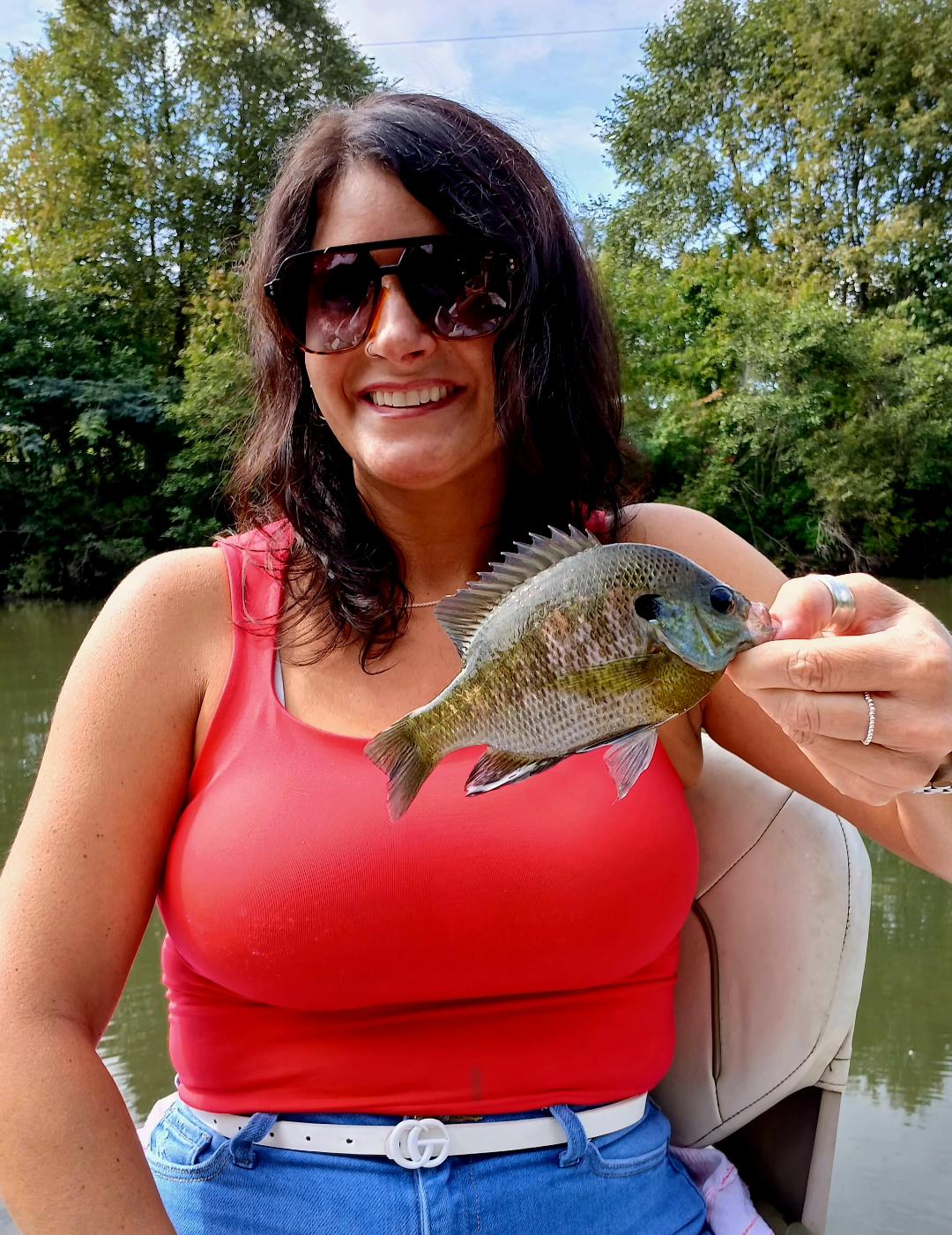
Fishing for Bluegill, Sunfish, and Panfish in Western North Carolina
In this article I will discuss fishing for bluegill, sunfish, and other panfish in western North Carolina. Trout get the majority of interest by local and visiting anglers. Bass; largemouth, smallmouth, and spotted are right behind trout. However, fishing for panfish is an underutilized fishery that often gets overlooked. This is particularly true in the summer.
The best fishing for bluegill, sunfish, and other panfish is in the warmer months. This works perfectly as fishing for the other glamour species can be slow. Trout will be in the upper elevations. Largemouth bass will bite early and late. Smallmouth will be caught in the rivers.
Read more about guided fishing in North Carolina
Call Capt Jim at (941) 371-1390 or e-mail captjimklopfer@gmail.com
Most panfish species spawn in late spring and summer. For the most part, they are hungry and aggressive. To find them is to catch them in most cases. This is also pretty easy fishing. Working shoreline cover will produce in most North Carolina mountain lakes. There is no need for fancy and expensive electronics. It is the perfect opportunity for novice anglers and children to catch a bunch of fish and usually take home a meal, if desired.
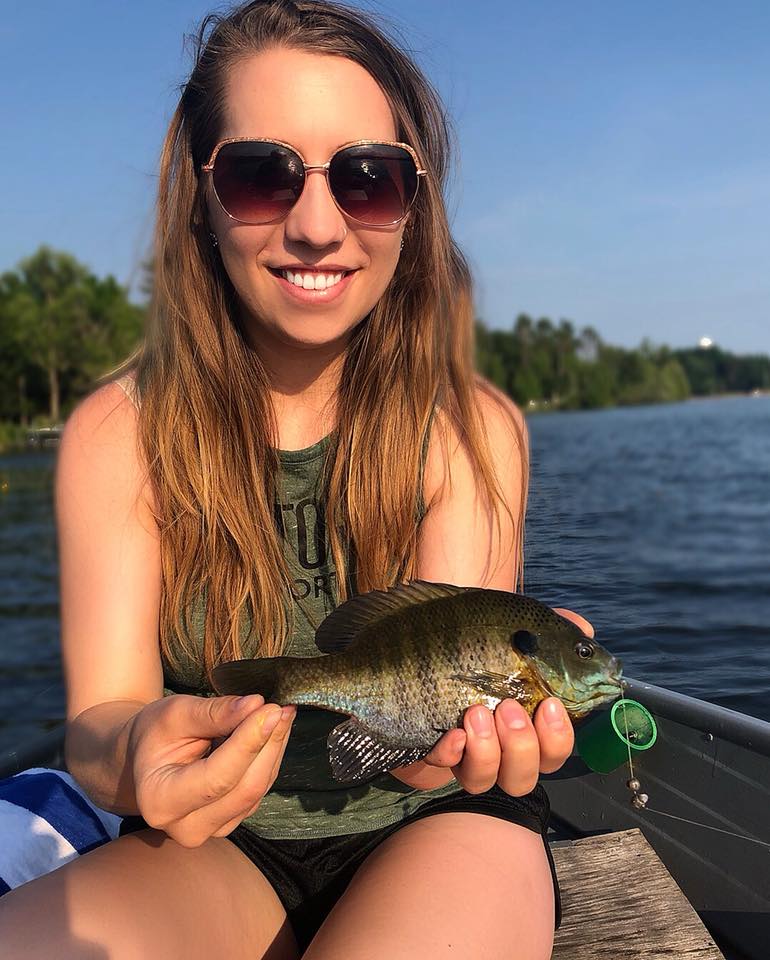
Best tackle and techniques for western North Carolina panfish
Tackle requirements are pretty simple and inexpensive for anglers targeting bluegill, sunfish, and other panfish. Most anglers already own a suitable rod and reel. The same outfit used for trout is fine. I prefer a 6 to 6 1/2 foot rod with a 1000 series reel spooled up with 4 lb or 6 lb monofilament or flourocarbon line.
Click link to read more about the best rod and reel
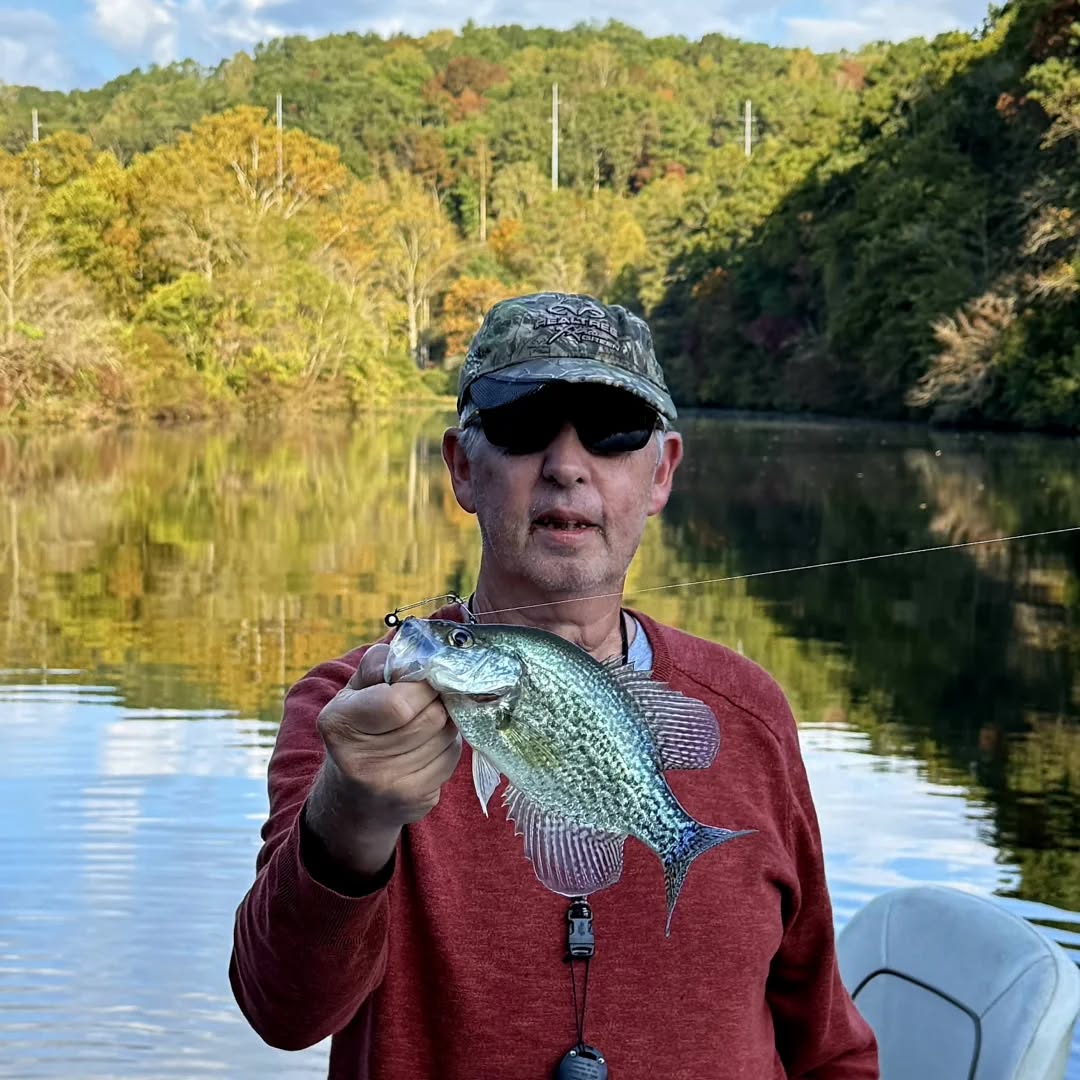
The best approach in most situations is to work shoreline cover, especially in lakes. Most often, the water is too deep a hundered feet from shore. Fallen trees, docks, brush piles, and rip rap are all likely holding spots. I like to keep moving until I find action, then work that area thoroughly.
Fishing for panfish with artificial lures
I really enjoy fishing for panfish using tiny artificial lures. They catch plenty of fish, especially bluegill, and are fun to fish. It also eliminates the inconvenience and mess of acquiring and using live bait. Lures allow anglers to cover more water in search of fish. Finally, lures catch more bass, which are great fun on light tackle!
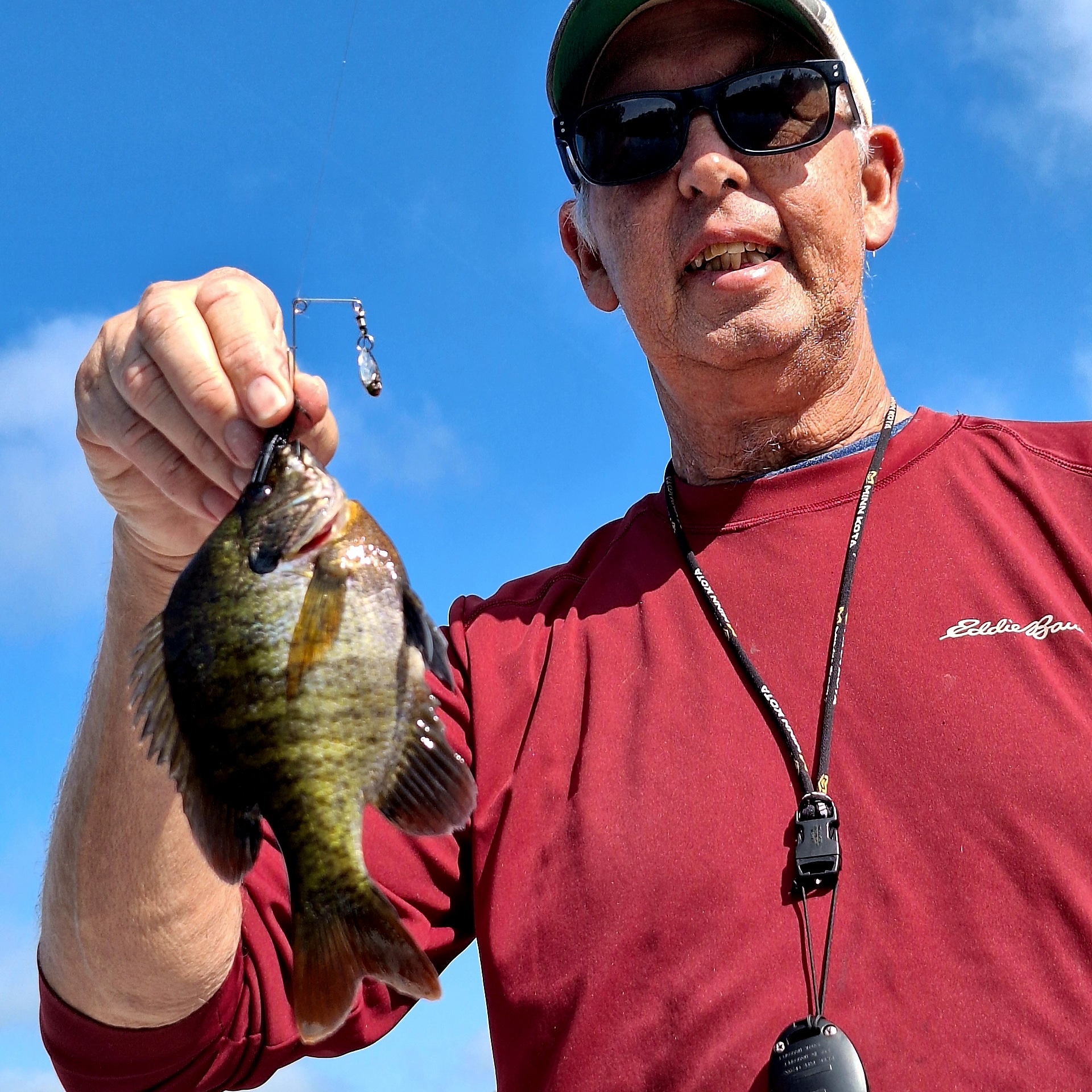
My favorite lure is a 1/16 ounce black Beetle Spin spinnerbait. Black and green are my favorite colors. These lures are inexpensive and productive. The best technique is to cast it out, allow it to sink, then SLOWLY retrieve it back in. Anglers can slowly troll with these lures as well.
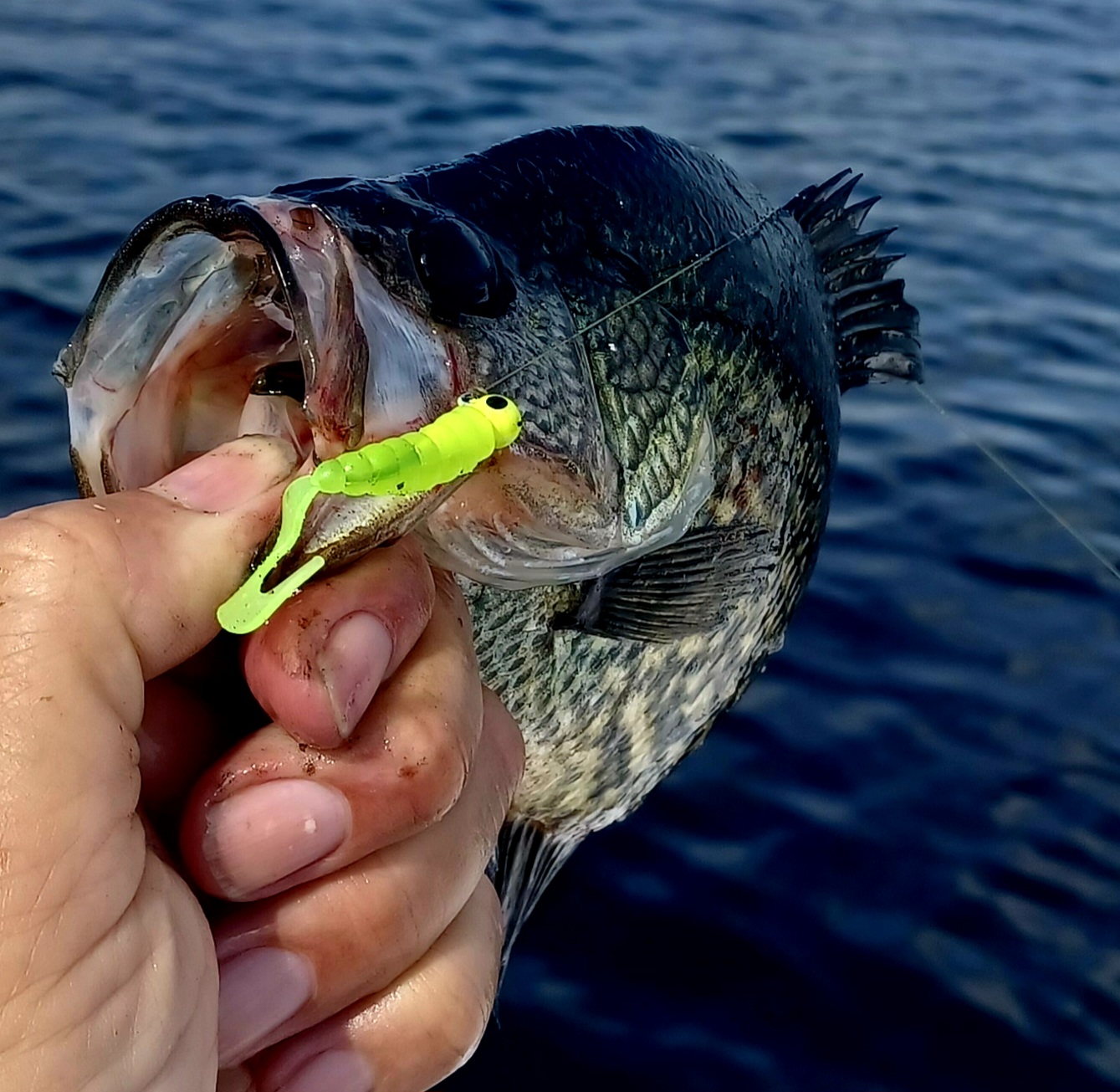
Tiny soft plastic baits are also very effective. I like a 1/16 ounce jig head with a 1″ chartreuse curly tail grub. Mister Twister is a good bait. They can be worked around all types of cover. A slow, erratic retrieve works best for me. Inline spinners such as the 1/16 ounce Rooster Tail spinner are very good panfish lures.
Fishing for western North Carolina panfish using live bait
It would be hard to argue that live bait is best for anglers looking to catch a bunch of bluegill, sunfish, and other species. Bait is very effective and pretty easy to use. Red worms area great all round bait. Nightcrawlers can be pinched off in 2″ pieces. Both are easily obtained at retail locations and some convenience stores. Crickets are also popular, though less available, are are very good for anglers targeting large bluegill.
My favorite rig is a #8 bait holder hook with a small split shot. This allows the baited hook to slowly sink through the water column without any resistance. I like to feed out line and watch it closely. If it moves or twitches I like to reel tight and set the hook.
Anglers can certainly fish a live bait under a float. This is a time tested technique that has probably caught more fish than any other method. It works very well in shallow water. Anglers simply add a float 2 or feet above the hook.
In deeper water, a slip float with a bobber stop works well The line goes through the bobber. A split shot and hook are added. A small stop allows anglers the depth desired. The bobber stop goes through the guides, allowing anglers to cast. Then, the line slips through the bobber to the stop, suspending the bait.
Live minnows are terrific, especially for anglers targeting crappie. However, they are not as readily available and are more difficult to keep alive. Still, many anglers consider the effort to be worth it.
Fly fishing for bluegill and sunfish
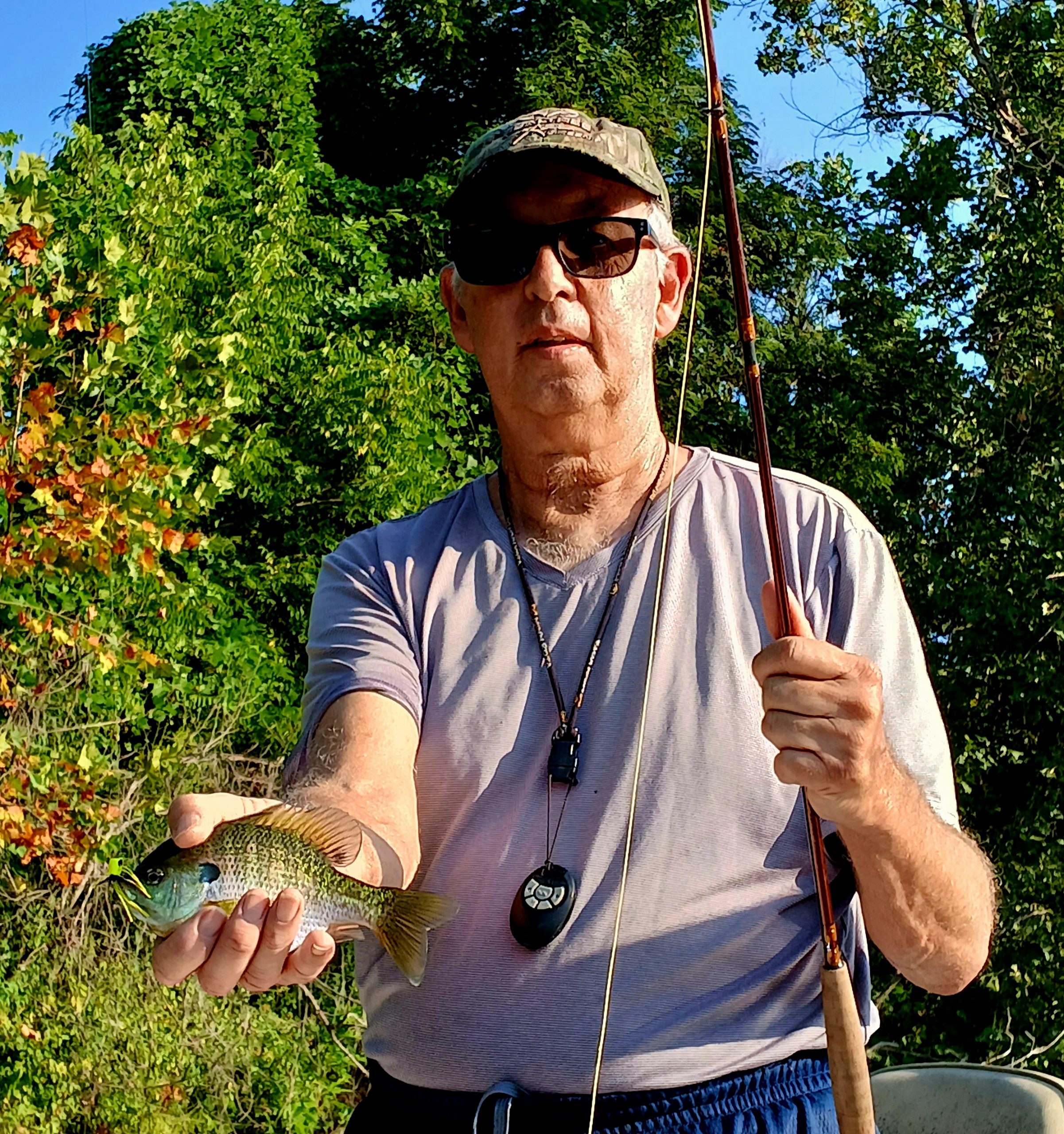
I really enjoy fly fishing for bluegill and sunfish. It is my favorite way to fish and can be very productive. Fly fishing is efficient as the fly spends so much time in the strike zone. There is no need to reel in, the line is simply picked up and re-cast.
Again, the same tackle used for trout is fine when chasing panfish. A 3wt or 4wt with a floating line is fine. A 9 foot 5x leader works well. I almost always fish poppers. I like white and chartreuse as they are easy to see. I like a #8 as a good all round size. Anglers wanting larger fish can bump up to a #6 or #4.
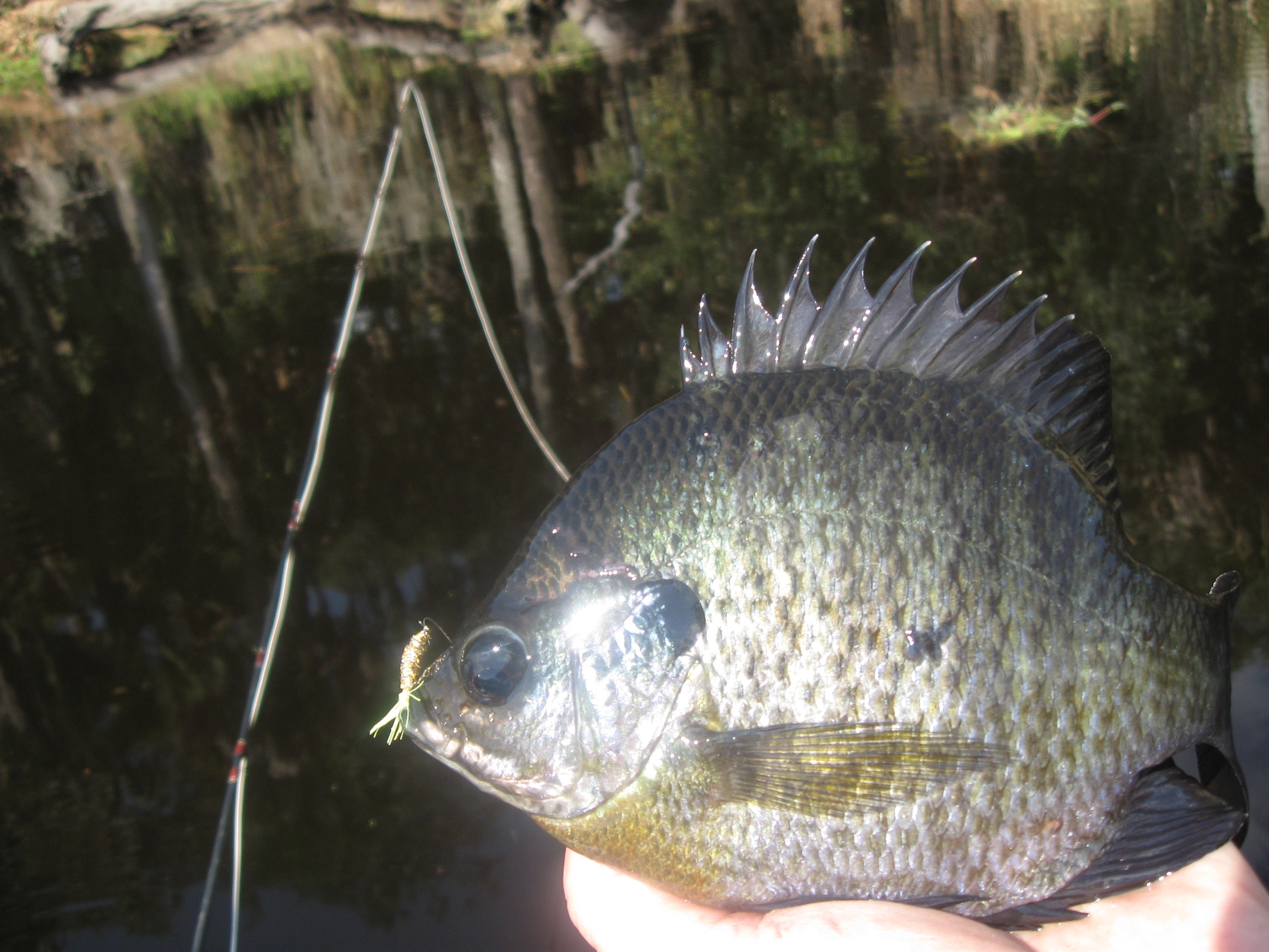
Subsurface flies also produce. Anything black and buggy looking will work fine. a #10 wooly bugger is tough to beat. Hares ear and pheasant tail nymphs are good when the bite is tough. Tiny streamers and minnow patters are also effective. Foam rubber spiders are terrific as well.
Top panfish species in western North Carolina
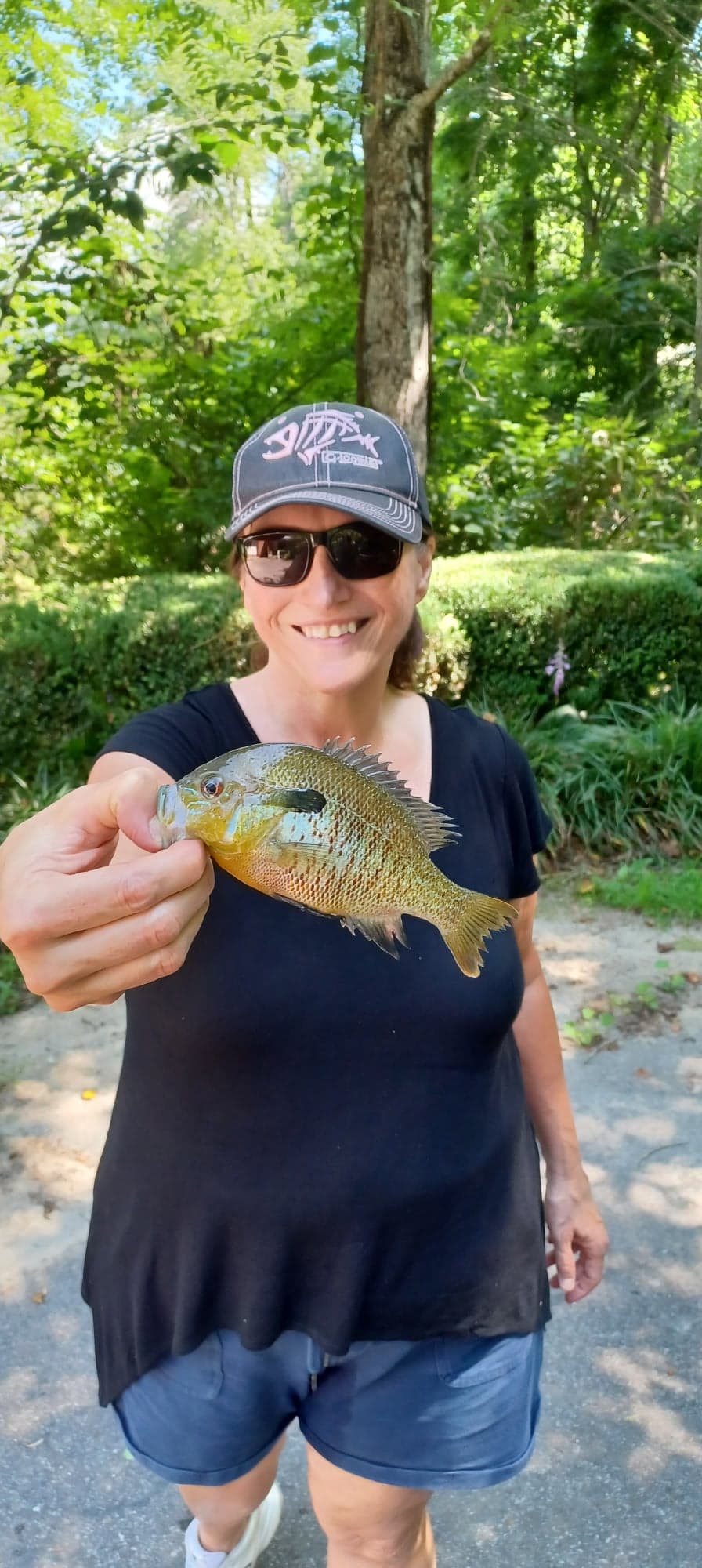
There are several different species than anglers can catch when fishing for panfish in western North Carolina. These include bluegill, redbreast sunfish, redear sunfish (shellcracker), crappie, and rock bass (red eye bass). Most are similar in habit, but there are some differences as well.
Bluegill
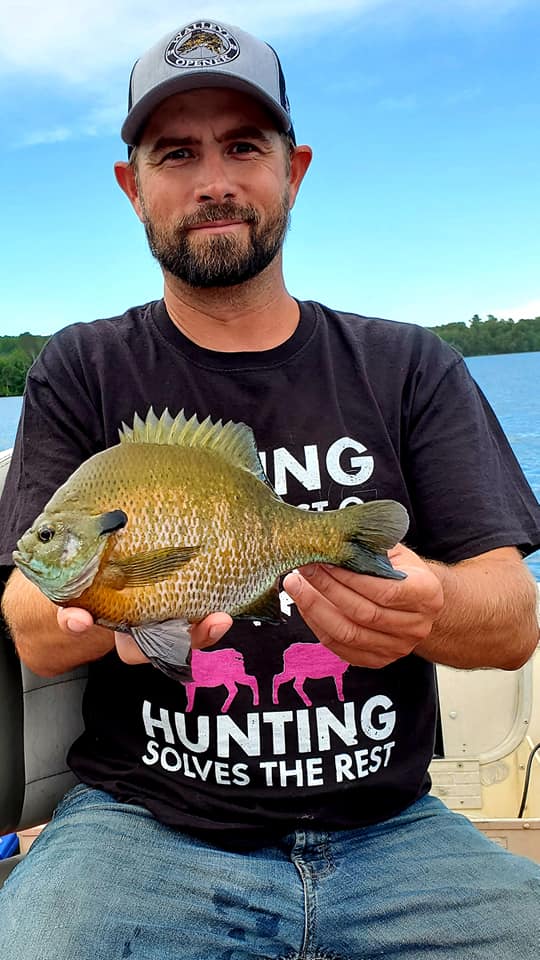
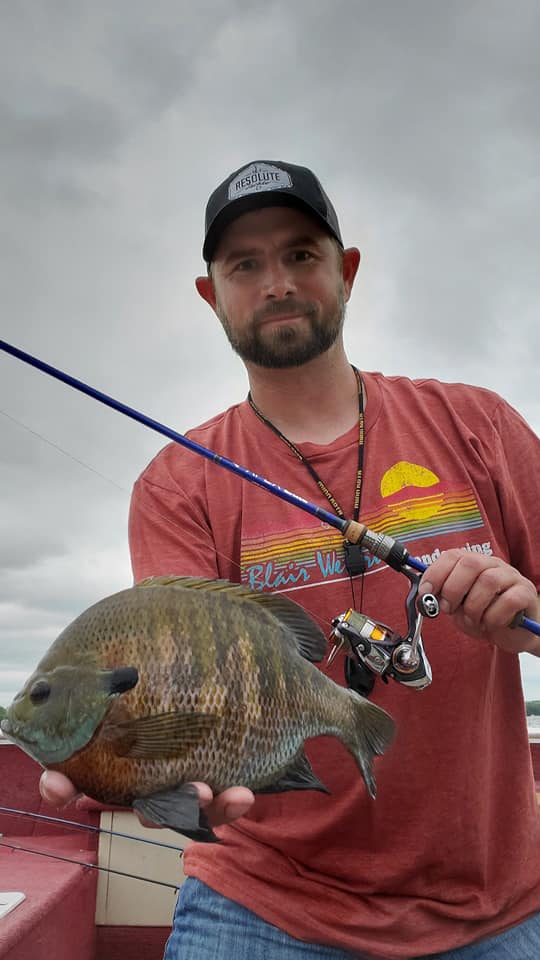
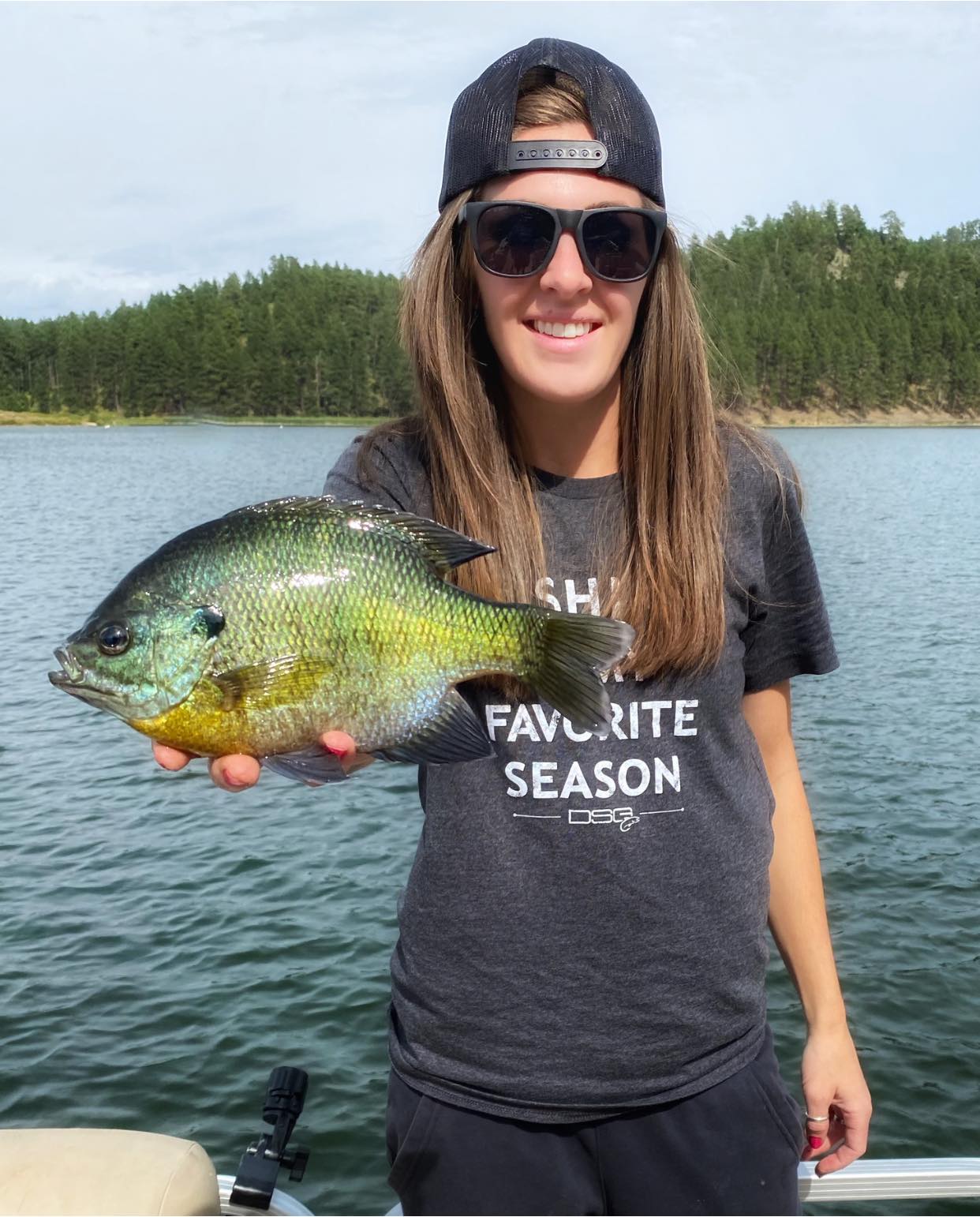
Bluegill are arguably the most popular game fish in North America. They are widely distributed, prolific, hard fighting, aggressive, and good to eat. What more could an angler want? Bluegill have an affinity for wood and are often found around trees and docks. Crickets, worms, lures, and flies all produce.
Redbreast sunfish
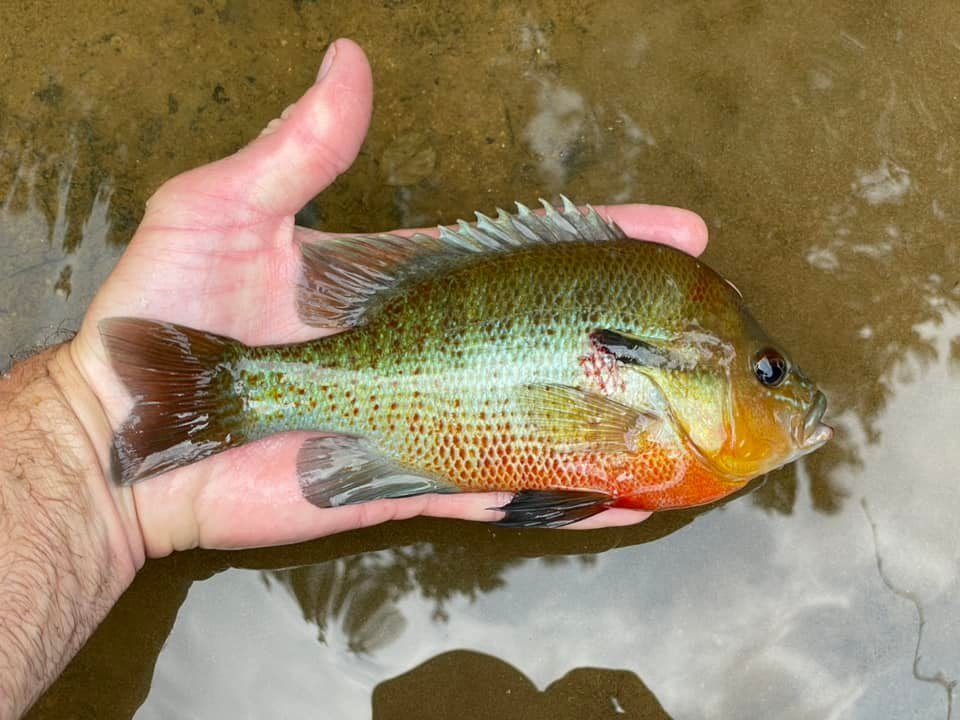
Redbreast sunfish Are fairly abundant in the western North Carolina mountains. They are found in much the same places as bluegill and other species. They also take the same lures and flies, though live bait is often a better choice.
Redear sunfish aka shellcracker
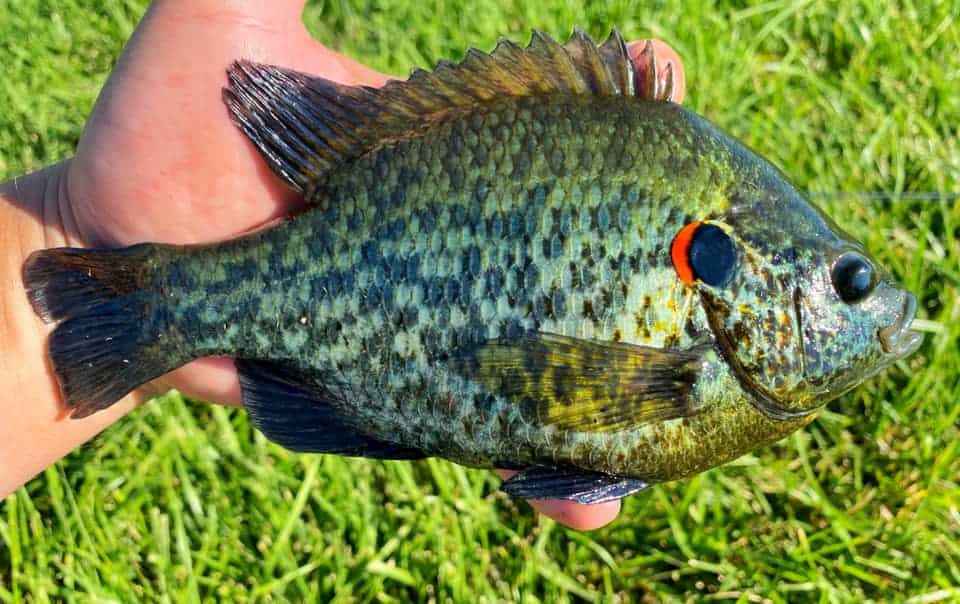
Redear sunfish are less prevalent in the mountains than they are in the lower elevations of North Carolina. However, they are available. Redear sunfish grow larger than the other sunfish species. They have delicious snow white fillets. Live bait is best, with red worms and grass shrimp being the top baits.
Crappie
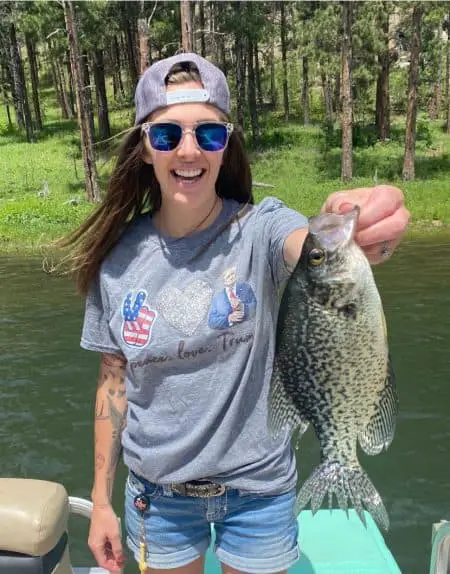
Crappie are a very popular freshwater species. They grow larger, are very pretty, and are fantastic eating. Crappie don’t put up a tremendous battle, but are fun none the less. They often school and once located the action can be fast. Crappie feed primarily on minnows, so small jigs and live minnows work best. Trolling with jigs can be very productive.
Yellow perch
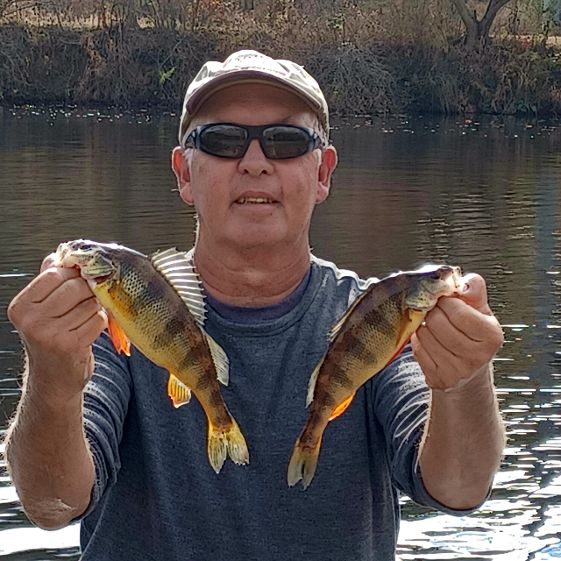
Yellow perch are found in many lakes and river systems in western North Carolina. One nice thing about yellow perch is that they like cold water. This gives anglers another option especially as it cools off and the other panfish species slow down. Yellow perch are very aggressive and readily take lures. They are also fantastic eating! They are often found in large schools in deeper water, but certainly move shallow as well.
Rock bass aka redeye bass
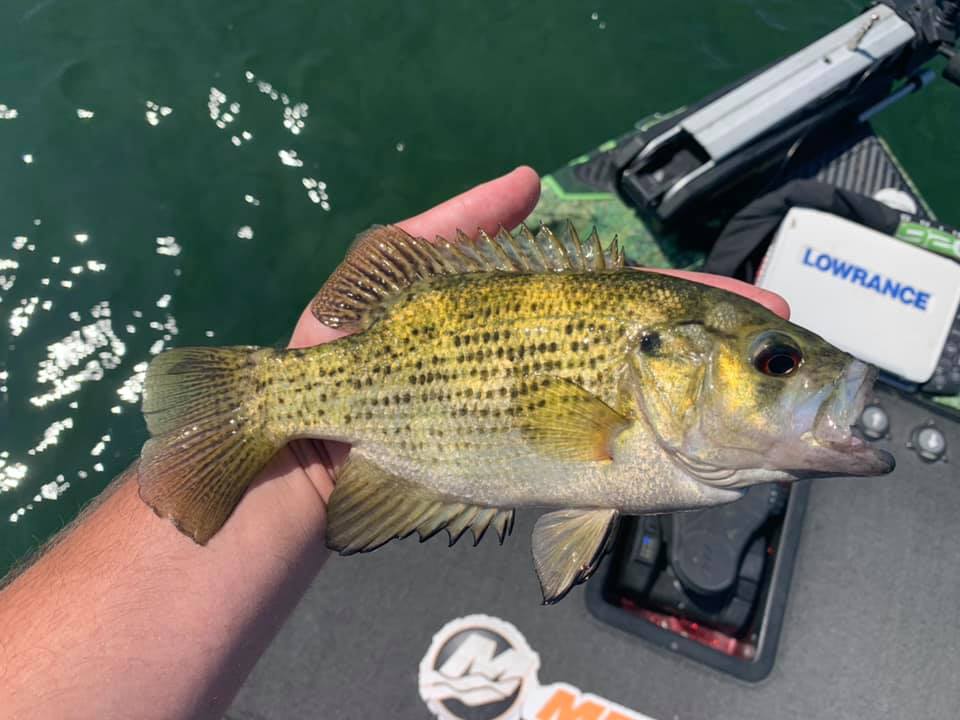
Rock bass, also known as redeye bass, are plentiful in most river systems that are warm enough for smallmouth bass. They are aggressive and rarely targeted, but are most often a welcome addition.They are decent eating, but not the best
In conclusion, this article on fishing for bluegill, sunfish, and panfish will help anglers catch more fish in the NC mountains!