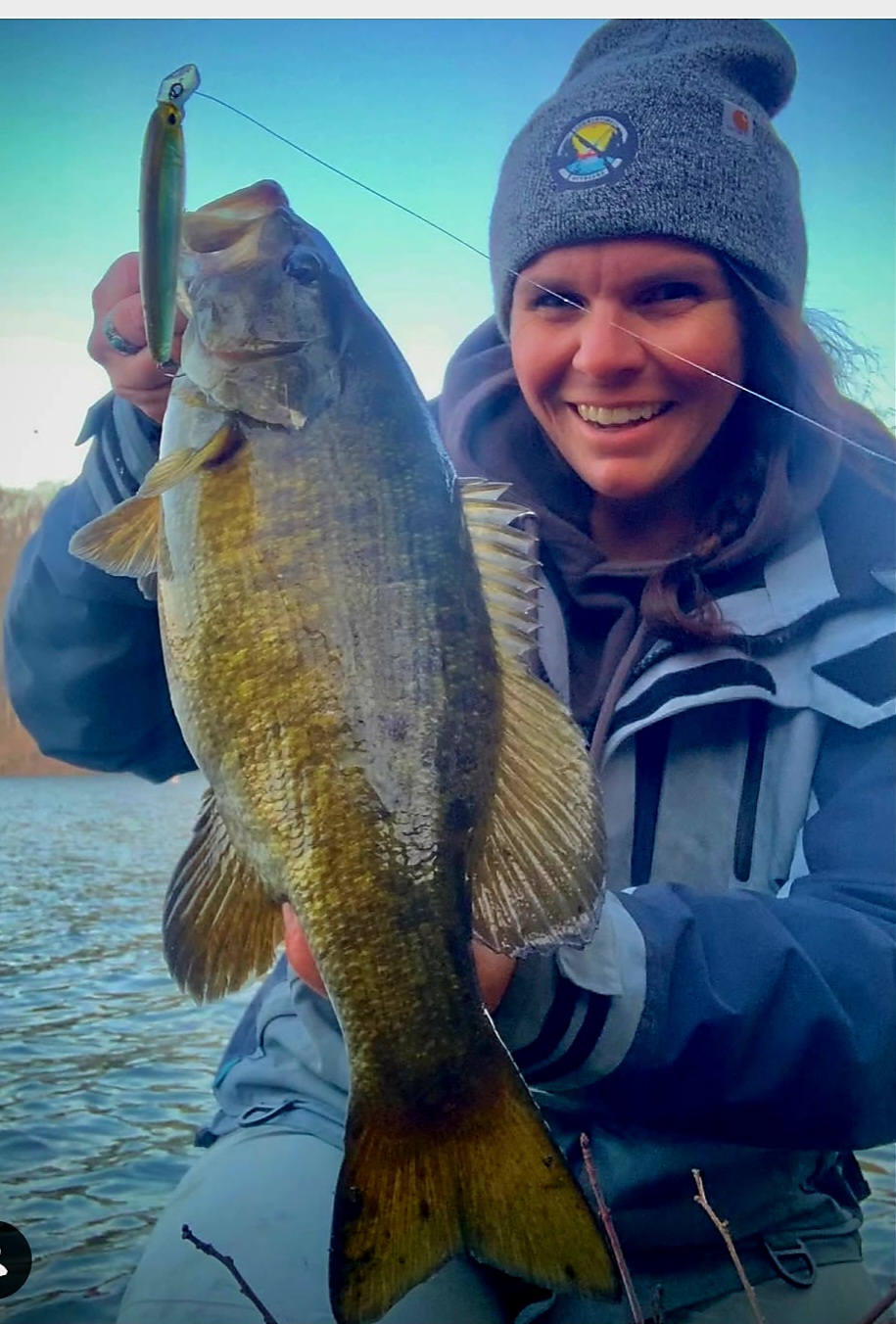
Fishing with jerkbaits in western North Carolina!
This article will thoroughly cover fishing with jerkbaits in western North Carolina. My name is Capt Jim Klopfer and I loves fishing with plugs, especially jerkbaits.
A jerkbait is an artificial fishing lure in the plug family. Jerkbaits are long and slender. They put out a lot of flash and vibration as they wobble. They have a bill which will determine the depth that the lure will run. Many manufacturers offer shallow and deep diving versions on the same bait. Both freshwater and saltwater game fish species will take a properly presented jerkbait.
Read more about guided fishing in North Carolina
Call Capt Jim at (941) 371-1390 or e-mail captjimklopfer@gmail.com
These lures are very versatile and will catch a variety of species found in the North Carolina mountains. This includes smallmouth bass, largemouth bass, spotted bass, rainbow trout, brown trout, brook trout, rock bass, panfish, redhore shiners, and more! Jerkbaits excel in clear, cold water, making them a great choice for western North Carolina, both in streams and rivers as well as lakes.
For the most part, jerkbaits mimic wounded bait fish. As they wobble, they flash and put out vibrations. Jerkbaits are available in many different sizes and colors from quite a few manufacturers. However, they all basically work the same. Jerkbaits are excellent search baits as they allow anglers to cover a lot of water fairly quickly.
How to catch fish with jerkbaits
There are two basic retrieves that anglers use when jerkbait fishing; a steady retrieve and a “jerk and pause” retrieve. The latter is how the lure earned it’s name. Steady retrieves will produce, whether cast or trolled. Most jerkbaits have an excellent built in action. Anglers should vary the speed of the retrieve until a production one emerges.
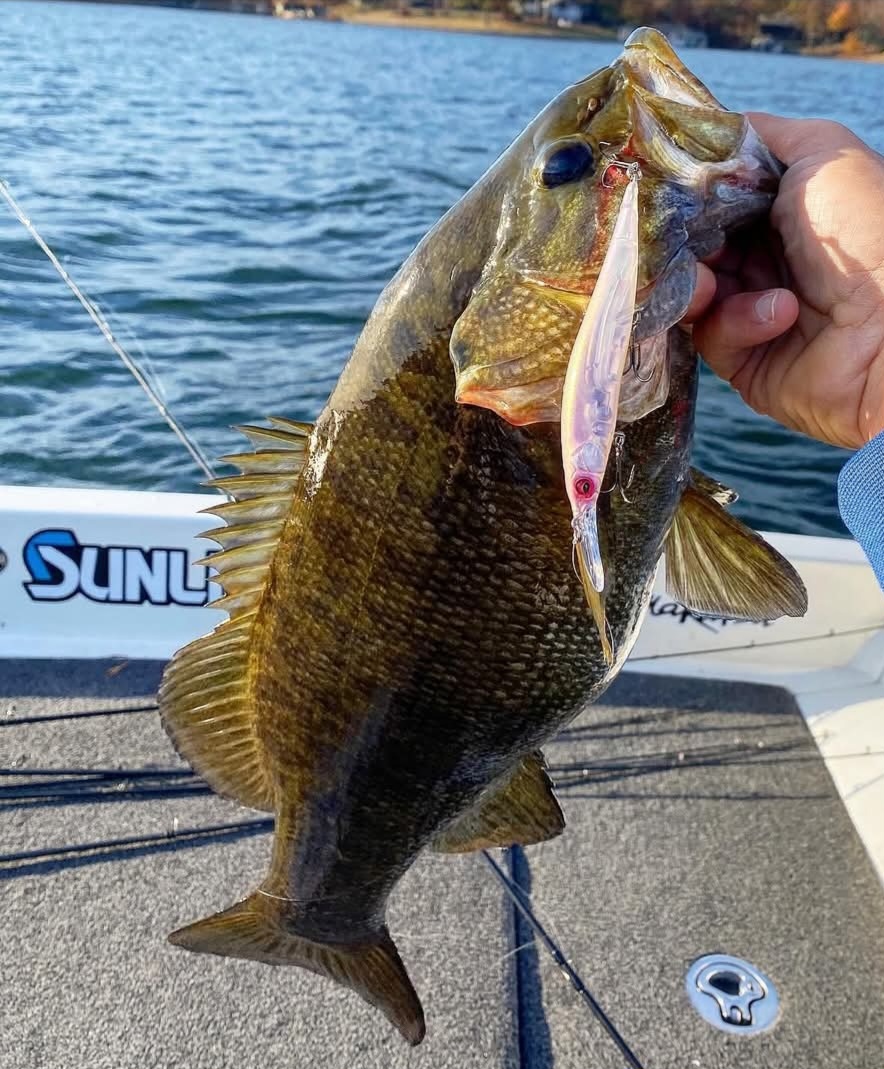
While a steady retrieve will catch fish, the most effective way to work a jerkbait is to use a more erratic presentation. The key to this is understanding how to use and manage some slack in the line. This violates many angling principles regarding keeping a tight line, but it is crucial to properly fishing a jerkbait.
The bait is cast out and retrieved a few cranks to get the lure to the proper depth. The angler then creates a few feet of slack. This is easily done by simply pointing the rod tip at the lure. After a few seconds, the rod tip is sharply jerked to the side. The slack will allow the rod tip to gain speed. When the slack is taken up, the lure will jerk forward violently.
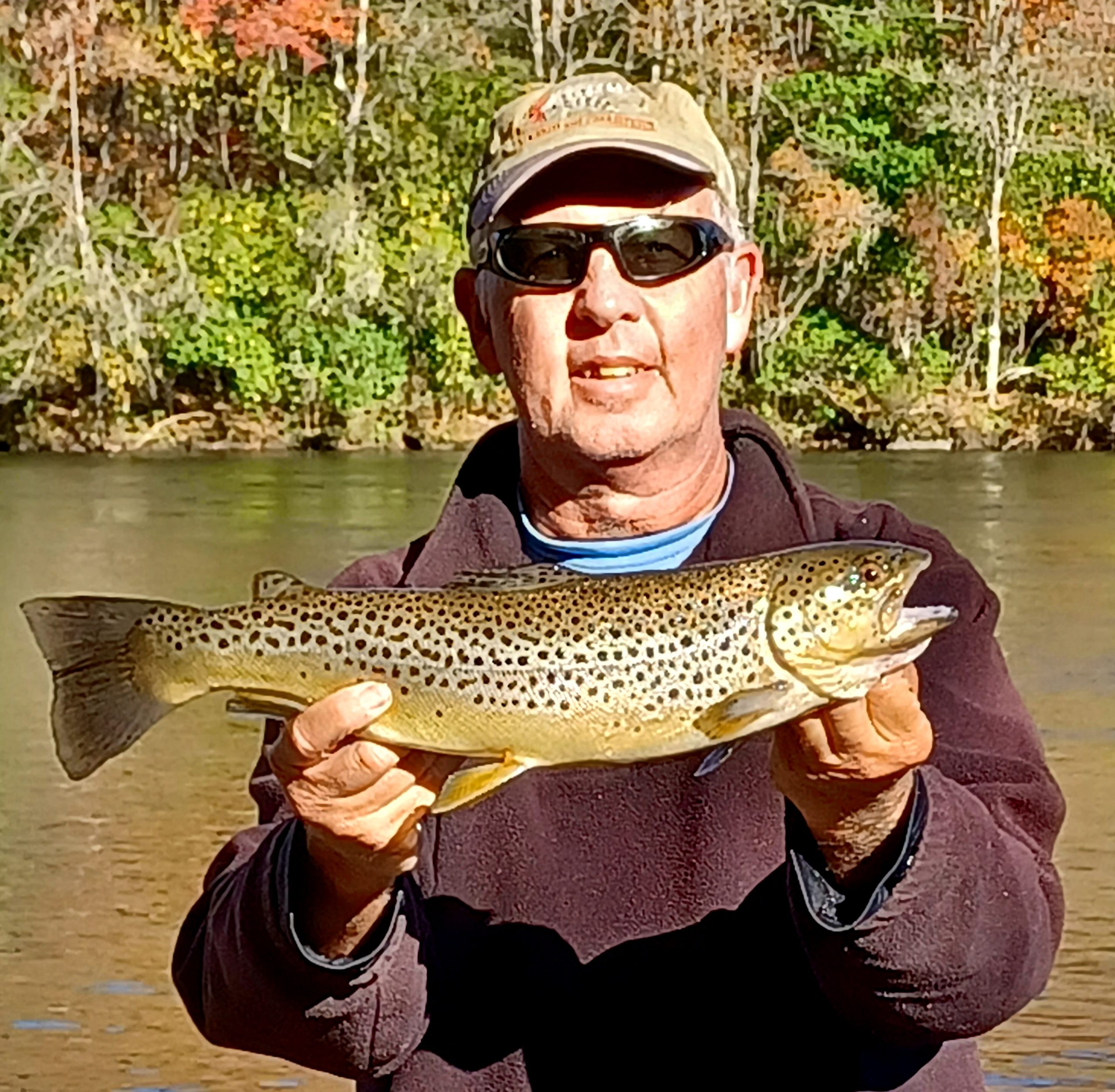
Once again, the angler puts slack in the line. This will result in the jerkbait suspending motionless in the water column. Quite often, this is when the strike occurs. This motionless presentation very realistically simulates a helpless bait fish, seemingly an easy meal. The process is then repeated back to the boat.
Trolling jerkbaits in western North Carolina
Jerkbaits are outstanding trolling lures! This is particularly true for anglers targeting trout in lakes, it is very efficient. The side to side wobble produces a lot of flash, mimicking and wounded bait fish. Color patterns and sizes are available to match any forage species that game fish are feeding on.
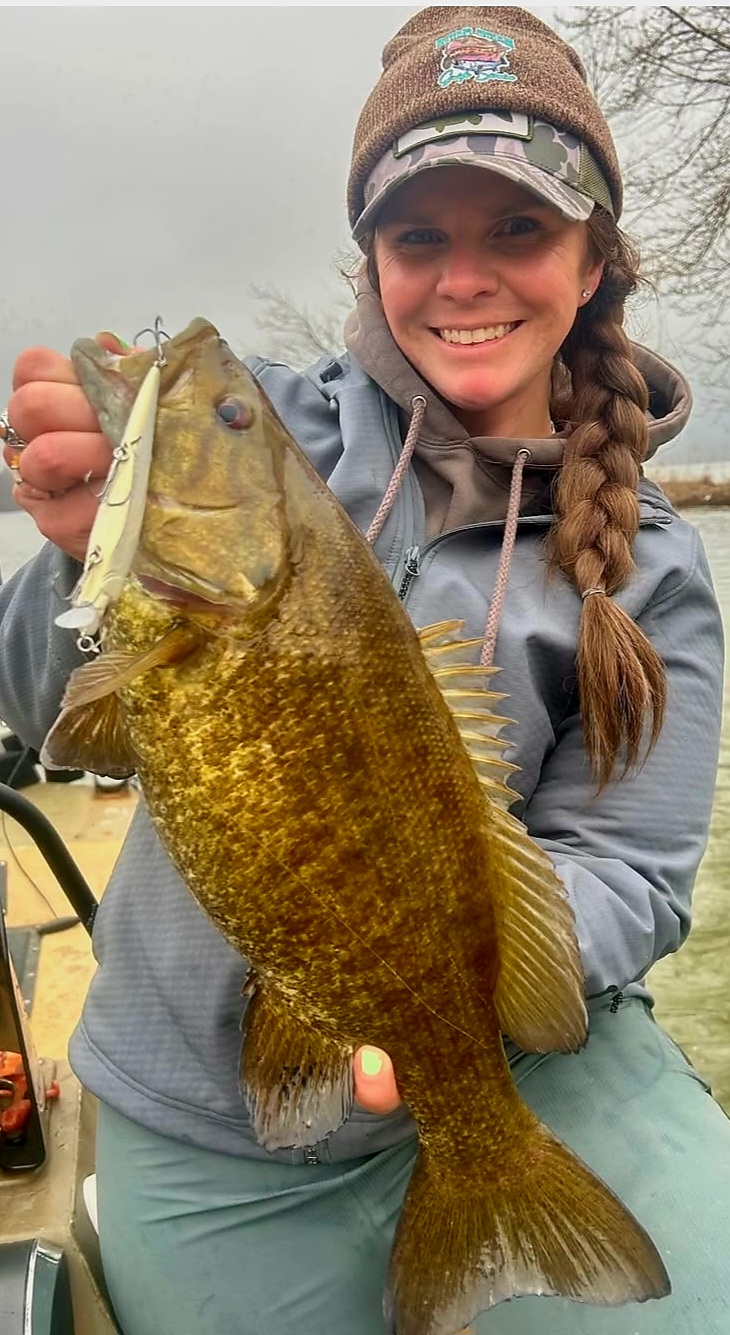
Trolling is simply driving the boat around at a slow speed while pulling a lure behind. It can be as simple as tying a lure onto the end of the line. Most jerkbait manufacturers offer models that run both shallow and deep. This makes trolling with jerkbaits very easy as no extra weight or gear is required. The line diameter and distance behind the boat will affect lure depth as well. Anglers should experiment with speed, a slight change can make a big difference.
Serious anglers will troll jerkbaits behind downrigger balls and off of planer boards. This is a bit complicated. Snap on trolling weight are another easy method that anglers can use to get the lure down deeper in the water column.
Best conditions for jerkbait fishing
For the most part, jerkbaits produce best in water that is fairly clear. While predator fish will track down a jerkbait in dirty water, there are other lures that are more effective under these conditions. Jerkbaits really shine in clear water and will provoke strikes when other more subtle lures do not.
In western North Carolina lakes, sloping points with rock or gravel are prime spots to fish a jerkbait. Smallmouth bass in particular fall prey to this approach. A jerkbait worked over deeper submerged vegetation will produce bass, as well as other species. However, they do have exposed treble hooks and will hang up in heavier weeds.
Smaller jerkbaits are very effective in streams and rivers. Bass and other species will readily take a bait flashing through a deeper hole. However, they really do not work well in strong current. The #8 Rapala X-Rap Extreme action Slashbait is my favorite. #4 trout pattern Rapala Husky Jerk baits are excellent for anglers chasing trout.
Jerkbaits are an excellent choice to work long stretches of rip rap, common near dams. They allow anglers to cover a lot of water. The lure will catch active fish as well as triggering strikes from inactive fish.
Jekbaits really shine when working large schools of bait. This occurs quite often in freshwater environments that have shad and herring. Predator fish will ball up bait and “trap” it against the surface. A jerkbait cast into this bait or near the edges will usually draw a strike. All bass do this, but hybrid and striped bass are often caught in this situation.
Best jerkbait fishing tackle
Anglers jerkbait fishing can properly present these lures using both spinning and baitcasting tackle. In either cast, a long, limber rod is preferred. This type of rod will absorb the shock of aggressive strikes, resulting in more fish landed. A 7′ to 7 ½’ rod works well. Spin anglers will do fine with a 2500 series reel in most applications. I like 10 pound monifilament line. I really think the stretch helps land more fish.
While both spinning and baitcasting tackle can be used when fishing jerkbaits, baitcasting tackle really does have several advantages. These advantages are the faster retrieve ratios of baitcasting reels and the fact that they manage slack line much better. This is especially true when using heavier baits. Anglers trolling with jerkbaits almost always use conventional gear.
For the same reasons that softer fishing rods are used, most anglers jerkbait fishing opt for monofilament or flourocarbon line. Braided line does not stretch at all and that “give” really helps anglers land more fish. Anglers trolling with jerkbaits will use braided line along with a fairly long flourocarbon leader.
Choosing the best jerkbait
Anglers should choose the jerkbait that they use the same way they would other artificial lures. In most cases, the best approach is to use a lure that resembles the local forage in both size and color. There are times when a larger, flashier bait will get the attention of a fish. A good rule of thumb regarding color is to use light colors in clear water and darker colors in dark water. White and silver produce in clear water, green, black, and gold in dark water, and pink and chartreuse in stained water.
There are quite a few lure manufacturers that sell quality jerkbaits. Some offer both freshwater and saltwater versions. Here is Capt Jim’s list of his favorite jerkbaits.
Top 8 jerkbaits;
-
Rapala X-Rap Extreme Action Slashbait
-
Yo-zuri Crystal Minnow
-
Rapala Husky Jerk
-
Strike King KVD Jerkbait
-
Megabass Vision
-
Berkley Flicker Minnow
-
Storm Thunderstick
-
Rebel jerkbaits
While all jerkbaits share traits and are similar, there are some aspects that are different as well. We will briefly cover these differences in each description in this list of top 13 fishing jerkbaits.
Rapala X-Rap
The Rapala X-Rap Extreme Action Slashbait is Capt Jim’s favorite jerkbait. They are available in freshwater and saltwater models as well as shallow and deep diving versions. Rapala X-Raps are available in a wide variety of colors. The 08 size is good when a smaller, finesse bait is needed. The #10 size is a good size for many applications. White is an excellent all round color.
Yo-zuri Crystal Minnow
Yo-Zuri baits are well known for having fantastic finishes, and their jerkbaits are no exception. These finishes are offered in many different colors and patterns. They are available in shallow and deep diving models and several sizes, from 2 3/4″ to 5 1/2″
Rapala Husky Jerk
The Rapala Husky Jerk is another older fishing lure. It is less expensive but a very effective bait. It is an excellent choice for smaller species as it is available in small sizes. It is primarily used by freshwater anglers. Gold is one of the most popular colors.
Strike King KVD jerkbait
The Strike King KVD jerkbait has a lot of action, perhaps more than any other bait. It is available in a few different sizes and quite a few color patters. Sexy Shad is very popular. It also has a weight transfer system, resulting in longer casts.
Megabass Vision
The Megabass Vision is an excellent jerbait. However, it is a very expensive lure, retailing for around $25. However, some serious anglers swear by them. They have a unique shape and are available in an astounding number of color patterns as well as shallow and deep diving models.
Berkley Flicker Minnow
The Berkley Flicker Minnow is a very affordable deep diving jerkbait. It is a favorite among freshwater anglers who troll. It is available in 4 sizes and 13 colors.
Storm Thunderstick
The Storm Thunderstick is another very affordable, old-school jerkbait. It is available in shallow and deep diving models as well as many popular basic color patterns. Firetiger is a favorite among anglers. It has internal rattles as well.
Rebel jerkbait
Rebel lures have been catching fish for decades. The Trackdown, or TD series of jerkbaits are effective on a variety of freshwater species, whether cast or trolled. They come in several sizes, shallow running, with a good selection of finishes.
In conclusion, this article on fishing with jerkbaits in western North Carolina will help anglers be more successful using these effective fishing lures!