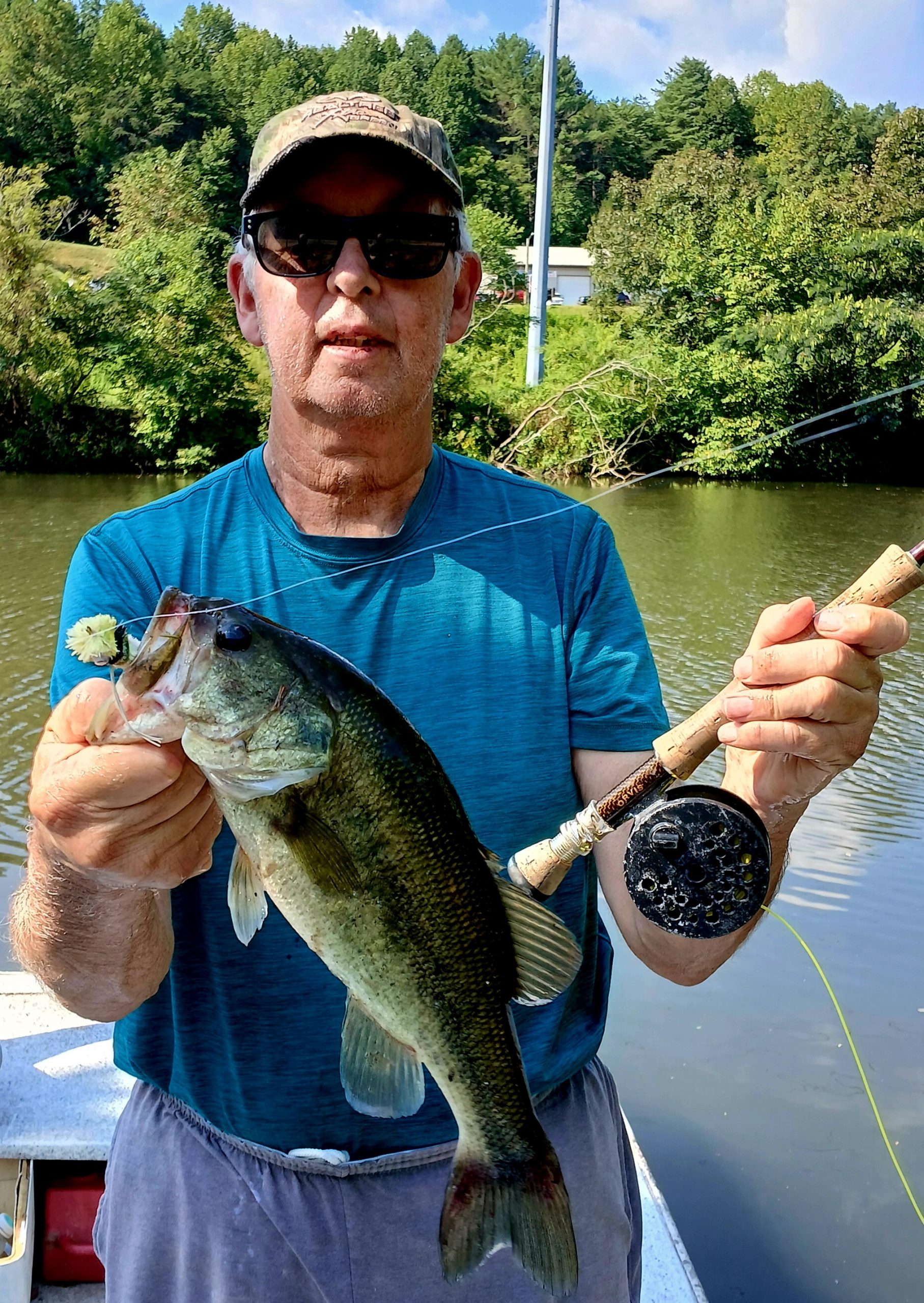
Fly Fishing for bass in western North Carolina
In this article I will cover fly fishing for bass in western North Carolina. Fly fishing is very popular in this neck of the woods, particularly for trout. However, fly fishing for bass is both fun and productive. Bass arguably put up a stronger fight and are usually not all that fussy.
Read more about guided fishing in North Carolina
Call Capt Jim at (941) 371-1390 or e-mail captjimklopfer@gmail.com
The area I am discussing is basically Asheville and west. However, the tactics and techniques will produce throughout North Carolina. Also, I will cover the three major bass species; smallmouth bass, largemouth bass, and spotted bass.
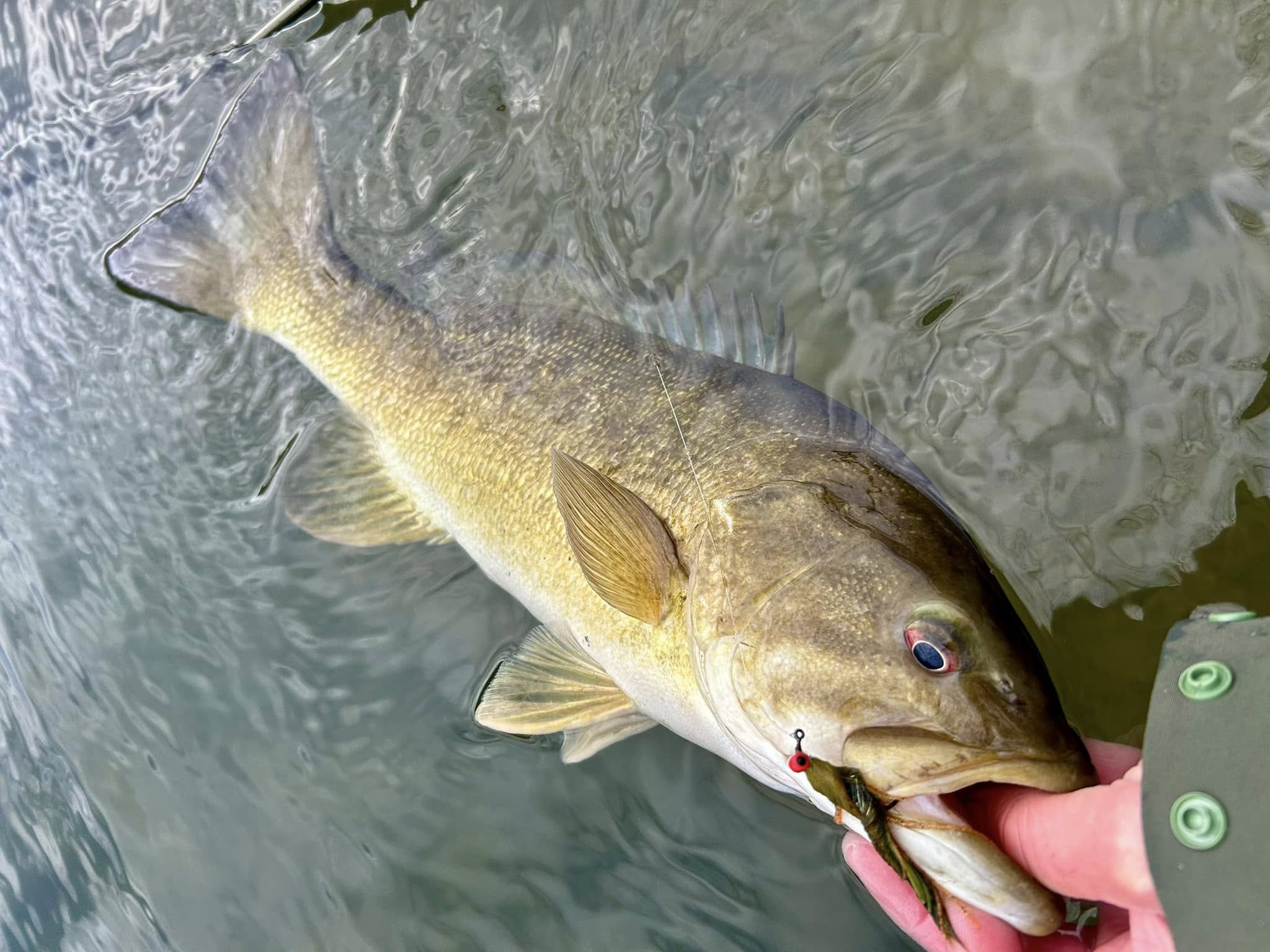
Fly fishing for bass in western North Carolina
One of the things I enjoy about fly fishing for bass is that it is relatively uncomplicated. Anglers only need a handful of flies and basic tackle. Bass are also a great option in the warmer months when trout fishing normally slows down.
Tackle requirements for fly fishing for bass
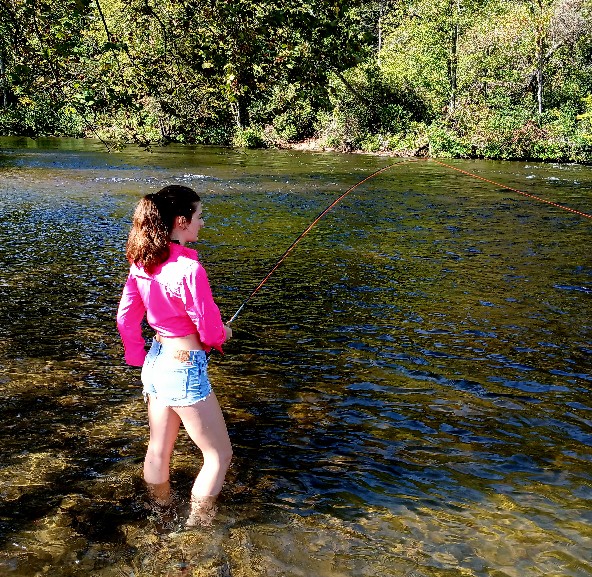
If I had to pick one outfit for fly fishing for bass in western North Carolina, it would be a 6wt rod with a floating “bass” line. These lines are heavily weight forward to assist when casting larger bugs. A 9 foot 4x leader is fine. I deally, 2 outfits are best; a 4wt for smaller rivers and a 7wt or 8wt for strictly casting big poppers for largemouth bass.
There is a place for a second fly line. This would be an intermediate sink tip. I prefer lines with the sink portion being clear, it kind of adds to the leader. These lines are better for working streamers in deeper water. Anglers can go shorter on the leader, 6 or 7 feet is fine.
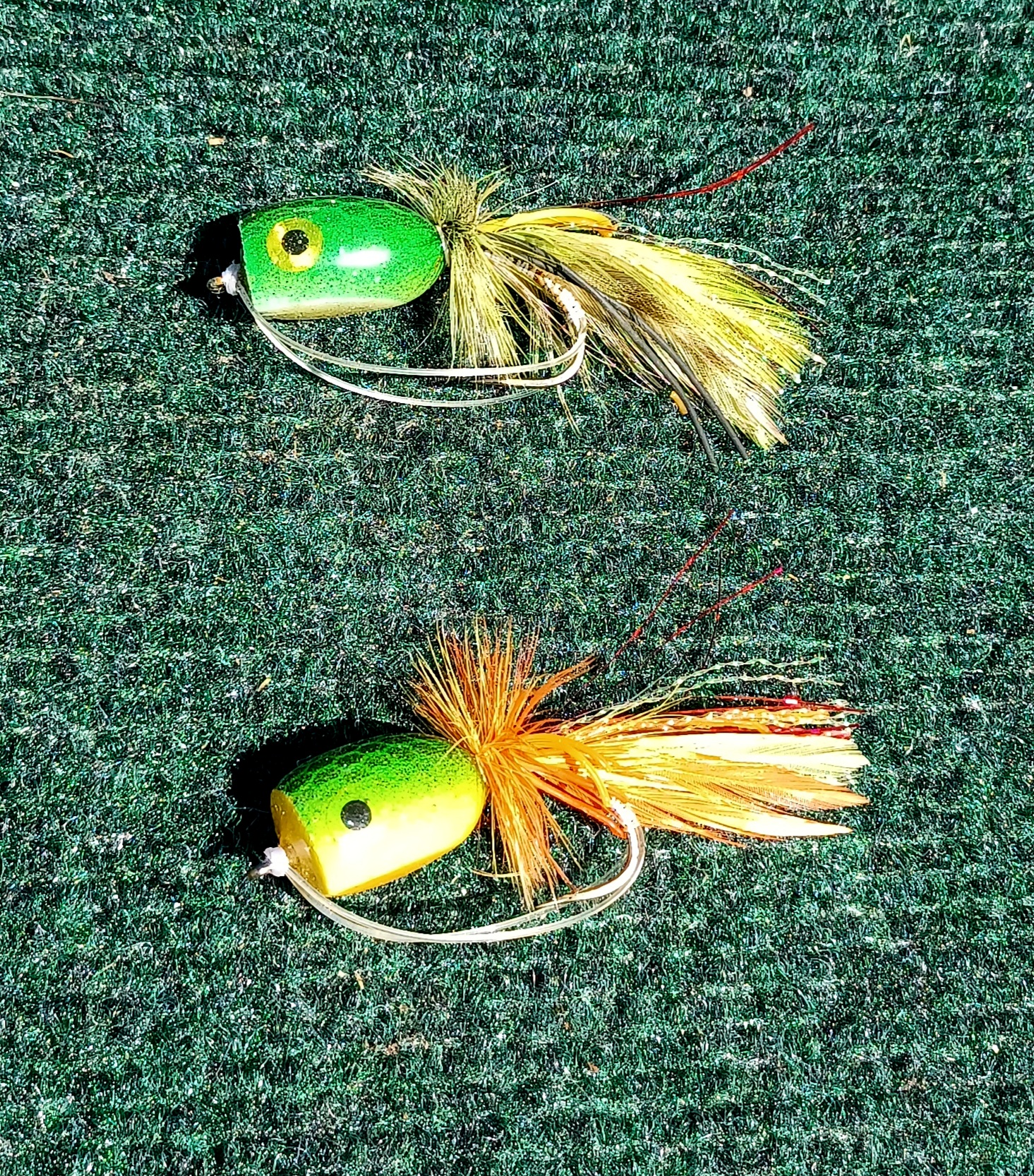
When it comes to flies, I keep it simple. My first choice when fly fishing for bass in North Carolina is always a popper, either foam or deer hair. White is a great color, followed by chartreuse. These are easy to see on the surface. Size #4 is good for river smallmouth, #1 and #1/0 for largemouth and lake fishing.
For subsurface fishing, it is tough to argue against the venerable Wooly bugger in black, brown, and olive in several sizes. These can be worked slowly as a crawfish or as a streamer. The Clouser Minnow, chartreuse over white, is a great bait fish pattern. A white Zonker is another good bait fish pattern.
Largemouth bass, smallmouth bass, and spotted bass
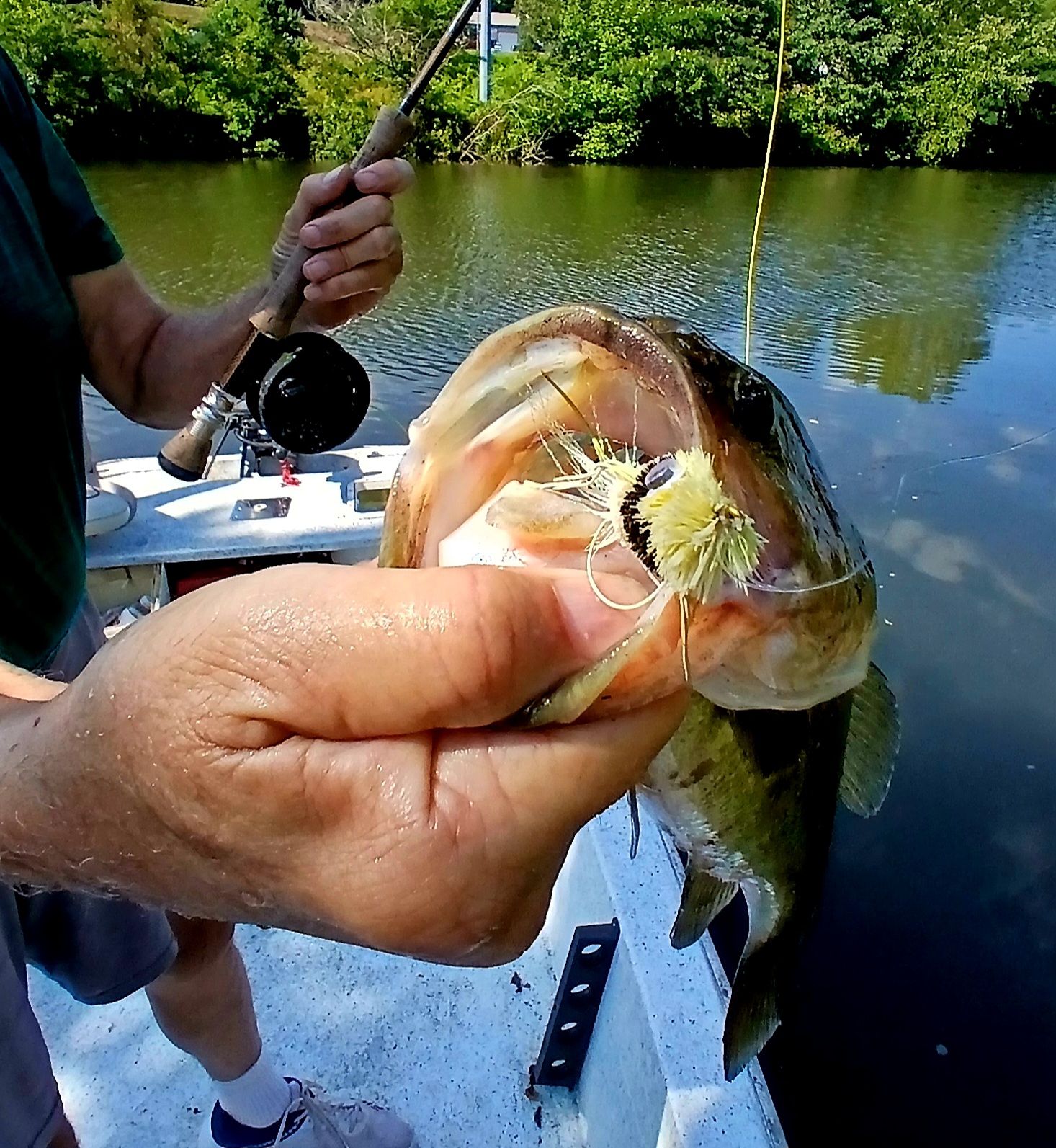
There are three major bass species in western North Carolina; largemouth, smallmouth, and spotted bass. Each bass is a bit different in habits, so they will be covered separately. Anglers can wade fish or fish from a boat. In shallow streams and rivers, wading is an option. However, fishing from a canoe, kayak, or drifting in a raft will definitely increase the chances of success.
Also, there are usually no issues with the back cast as there is when fishing from shore or wading close to shore. It is simple a matter of covering more water that receives less pressure. Mast anglers targeting largemouth and spotted bass will do so from a boat.
Smallmouth bass
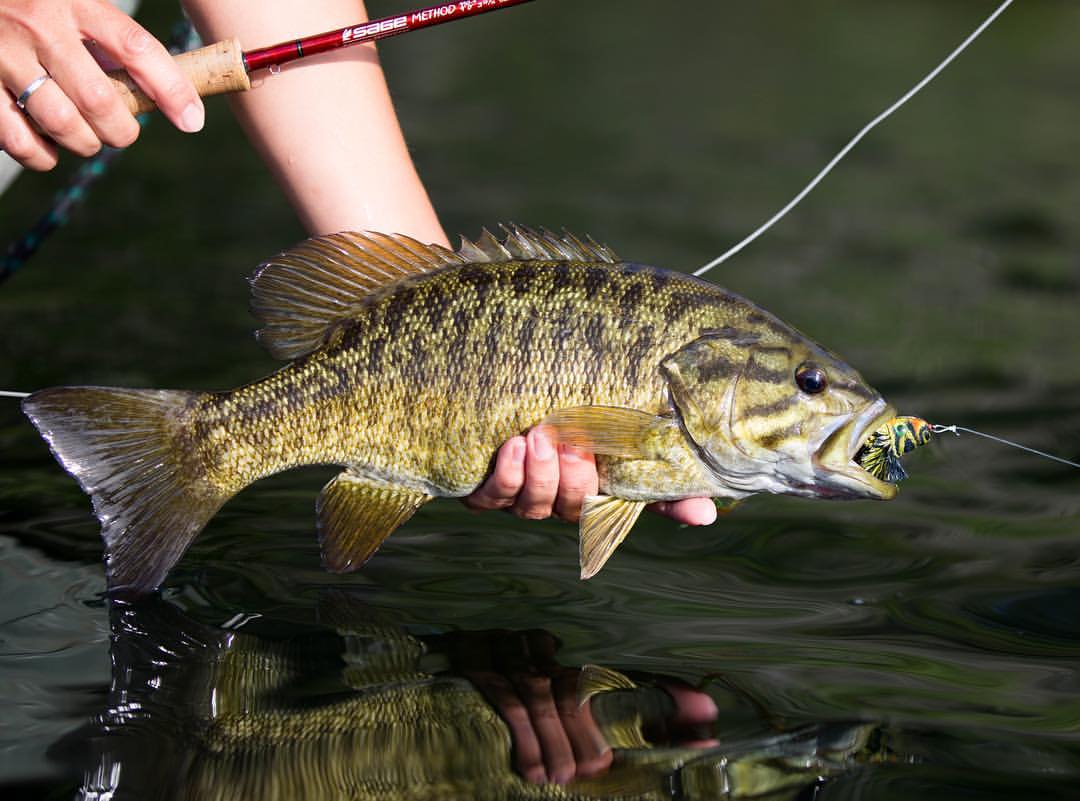
Smallmouth bass are the most similar to trout of the three bass species. Many anglers, myself included, prefer to chase them in rivers. However, unlike trout, smallmouth prefer areas of less current, Rarely will they be caught in the faster riffles.
The best spots to target smallmouth bass are the deeper pools between the faster moving water. The fish can lie in wait to ambush prey. The top two forage species for smallmouth are bait fish and crayfish. Minnow patterns produce all year long while crayfish imitations are best in the warmer months.
I almost always start off with a white popper. Bettes and Boogle Bug make quality products. I like to cast to quiet water along the shore, let it sit a moment, then strip sharply to make the bug “pop”. Then, I let it sit and repeat. Strikes will often occur as the bug sits, so don’t be in a big hurry. After several pops, I pick up the line and re-cast. Any type of structure such as fallen trees, boulders, and rock ledges are good spots to try.
Subsurface flies can be worked in a couple different ways. When using baitfish patterns, I like a quick one foot strip with a pause in between. Strikes often occur on the pause. Bouncing a Wooly bugger on the bottom requires a slower retrieve, often even a dead drift. Snags will happen, but that is where the fish feed.
Anglers can certainly target smallmouth bass in area lakes as well. Unfortunately, spotted bass have displaced smallmouth in several area lakes. Poppers can be cast on a floating line while streamers and crayfish patterns are best used with a sinking line. Rip rap near dams is a top spot. The inlet of the lake where water is moving is also usually a good area. Fallen trees and docks will hold smallmouth.
Largemouth bass
In my opinion, largemouth bass are overlooked by fly anglers in western North Carolina. For the most part, this is easy fishing. I use a deer hair bug most of the time. These bugs cast well and I think bass hold on to them a tad longer. I will use larger foam poppers as well.
Anglers will encounter largemouth bass schooling on the surface at times, particularly early and late in the day. A Clouser Minnow is a great choice in this situation, as long as the angler can get close to them. Otherwise, the best approach is basically easing along the shoreline casting at any likely looking structure. Rip rap, fallen trees, brush piles, and docks are all top spots!
There are times when bass will not take a popper off the surface. When this occurs, a switch to a sink tip and a big black Wooly bugger is a good strategy. A slow retrieve closer to the bottom works well. A large white Zonker or other bait fish pattern can also produce.
Spotted bass
Spotted bass are an invasive species in North Carolina. They have taken over a few lakes, displacing the smallmouth. However, they are aggressive and fight very hard. Anglers who like to keep a few fish will do well to target spotted bass, thinning them out is usually beneficial.
Spotted bass are different than the other two bass species. Both the regular spotted bass and “Alabama” bass are present. they are locally called spotted bass and tend to grow larger. They really like deeper water, often schooling up in deep water over structure. However, they can be caught along the shoreline as well. On calm days, they will be seen busting on the surface. This is great fun if you can get close enough for a cast.
Best rivers and lakes in western North Carolina
Anglers fly fishing for bass in western North Carolina have a lot of options. There are multiple rivers and lakes that offer the opportunity to catch bass on fly. Here is a list with a little information on each one.
Western North Carolina bass rivers
French Broad River
The French Broad River is a very good smallmouth river. There is a ton of access all around Asheville. It does get a lot of recreational traffic on summer weekends. As with all rivers, conditions change and anglers should check the flows. It is a larger river and is best floated.
Little Tenessee River
This is my “home” river, as I live in Franklin. It is a beautiful river that flows from the dam at Lake Emory to Fontana Lake. It can be floated or waded. There is a lot of wading access on the lower half off of Needmore Rd. The upper section is best floated. There are good numbers of smaller bass with larger ones mixed in. It is good for largemouth bass and panfish as well.
Pigeon River
The Pigeon River used to be horribly polluted. It has been cleaned up and offers good fishing for a variety of species. The area below Waterville Dam is remote and has good fishing. Watch the flows as there are class 3 rapids. The area around Clyde and Canton is good with better access. Largemouth bass are available.
Tuckaseegee River
The Tuckaseegee River flows from the mountains, through Dillsboro, Sylva, Webster, and Bryson City on it’s way to Fontana Lake. While known primarily as a trout fishery, there are smallmouth present. Anglers targeting smallmouth bass will do best in the lower section around Bryson City. There is a ton of access with nice launches. It is a big river here and best floated; wading can be dangerous.
Hiwassee River
The Hiwassee River flows between Lake Chatuge and Hiwassee Lake. There is limited access near Hayesville. The river on the Tennessee side is much better.
Cheoah River
The Cheoah River is in the far northwest corner of the peninsula, near Robbinsville. It is a remote, beautiful little stream and is full of smallmouth. Wading is tough, it is best floated. There is decent access.
Western North Carolina bass lakes
There are some lakes in western North Carolina with decent bass fishing. However, there is a catch. Many of these have become “herring lakes”. Blueback herring were introduced and it changed the behavior of the bass. The bass tend to roam in schools offshore, not ideal conditions for fly fishing unless they are feeding on the surface.
Lake James
Lake James is an hour east of Asheville. Many consider it to be the best smallmouth lake in the state. Largemouth and spotted bass are also available.
Lake Lure
Lake Lure is southeast of Asheville. It is a pretty mountain lake but is heavily developed and gets a lot of pressure being so close to the city. Largemouth are the best bet, though all three species are available.
Bear Creek Lake
Bear Creek Lake, known locally as Bear Lake, is near Tuckaseegee. It is fairly remote with a nice ramp. Largemouth are the main species, with some spotted bass. There are few if any smallmouth bass.
Glenville Lake
Glenville Lake is the highest elevation lake east of the Mississippi. It has good numbers of both largemouth and smallmouth bass. It gets a lot of pressure but is still a good fly fishing lake. The dam is right near the main ramp and is a good place to start. Stay away on summer weekends.
Fontana Lake
Fontana Lake used to be a fabulous smallmouth lake. However, spotted bass have really taken over. Fly anglers will have fun with them working the many creek and inlet shorelines. Lake levels fluctuate drastically, so adjust accordingly. Largemouth are present in decent numbers as well. Look for fish feeding on the surface.
Lake Nantahala
Lake Nantahala is a remote and gorgeous lake in the western North Carolina mountains. It is not easy to get to for anglers towing big bass boats. It is not an easy lake but is the best lake in North Carolina for anglers seeking a trophy smallmouth. Largemouth are available as well.
Lake Chatuge
Lake Chatuge lies on the North Carolina Georgia border. Most of the lake is in Georgia. It has a good population of spotted bass, along with both largemouth and smallmouth. Looking for surface action early then work shoreline cover.
Lake Hiwassee
Lake Hiwassee is a good smallmouth lake. However, the fish are often caught deep in this clear lake, a challenge for fly anglers. Casting poppers and crawfish patterns along the rocky banks is the best bet.
Santeetlah Lake
Santeetlah lake is in the far west corner of the state. It is a very good smallmouth bass lake, and has largemouth and spotted bass as well.
In conclusion, this article on fly fishing for bass in western North Carolina will help anglers catch more fish!