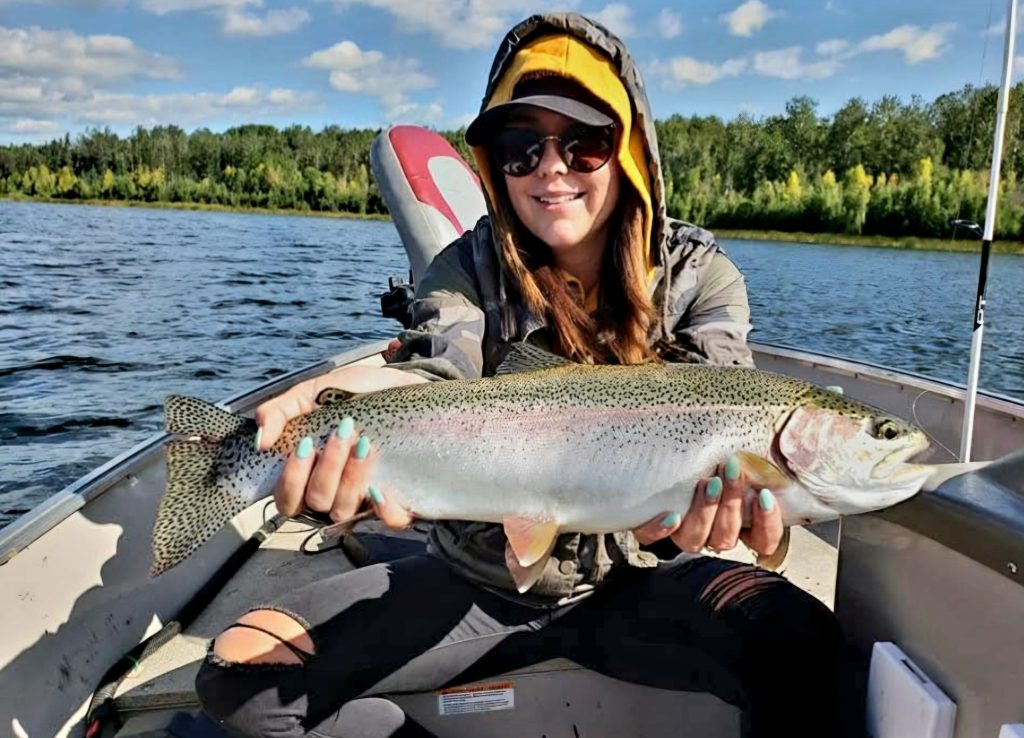
 Trout fishing in western North Carolina lakes
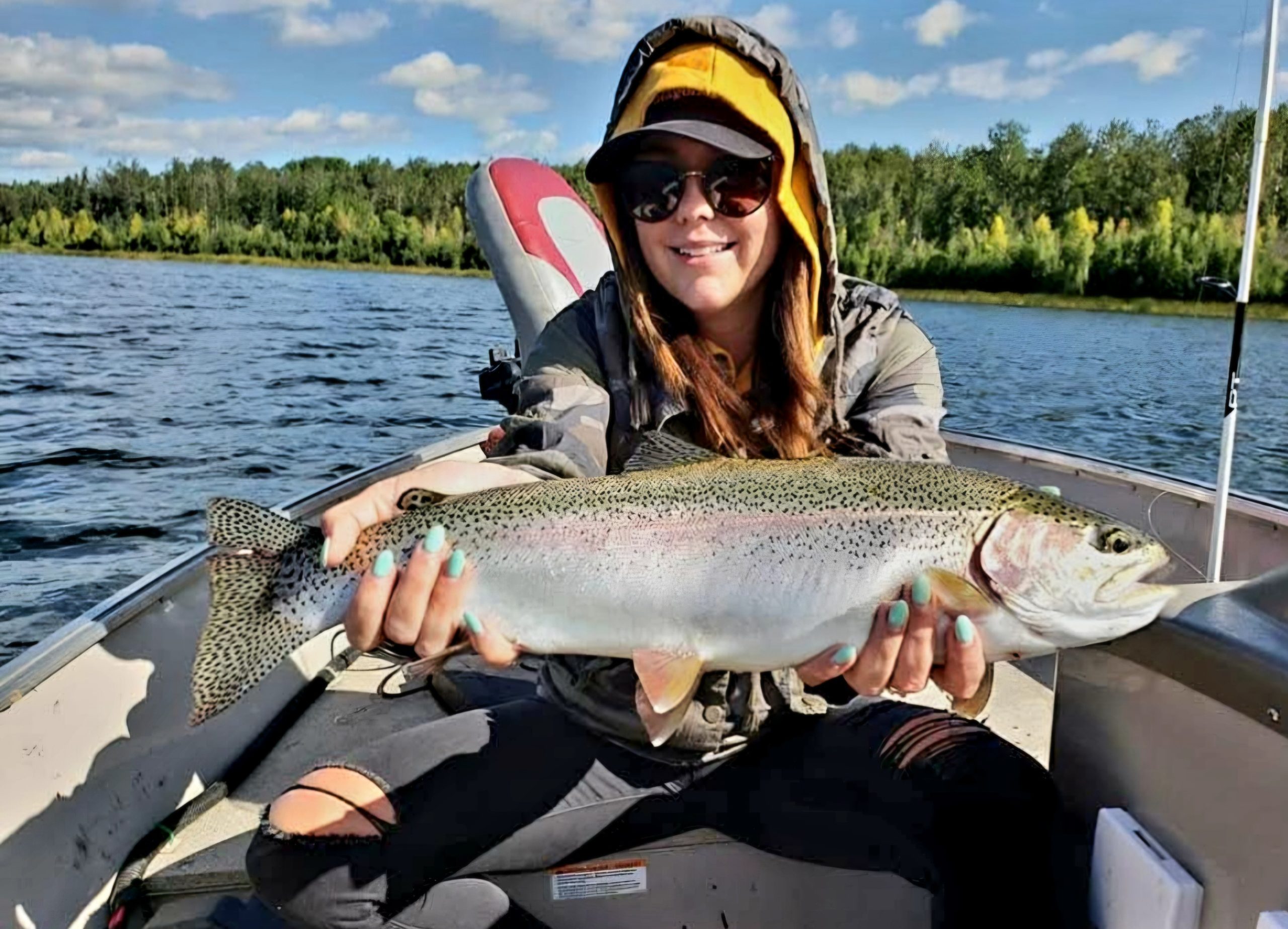
This topic of this article is trout fishing in western North Carolina lakes. Most anglers target trout in the many streams and rivers in the western North Carolina mountains, and for good reason. Trout are heavily stocked in some areas and wild trout are also available. However, there are a lot of trout in lakes in North Carolina. This is often an underutilized fishery!
Freshwater trout need clear, cold water in order to survive. The lakes and reservoirs of western North Carolina provide excellent habitat for trout. Most of the fish caught will be stocked rainbow trout. Stocked trout do not reproduce naturally. Anglers will encounter the occasional brown trout, and some of them will be large.
Trout fishing in western North Carolina lakes
Anglers trout fishing in North Carolina lakes use two techniques; casting and trolling. Of the two, trolling is the most popular and fair to say the most productive technique. Trolling is very efficient, anglers can cover a lot of water. Casting is more enjoyable, both spin and fly, and can be effective as well
Trolling for North Carolina trout
As mentioned above, when it comes to catching trout in lakes, trolling is tough to beat. Anglers can deploy multiple rods offering different lures at varied depths until a productive pattern emerges. Trout can be encountered throughout the water column
Most of the trout caught in North Carolina lakes will be of modest size. Therefore, light tackle is best. In this article I am going to keep it simple and not dive into downriggers and lead core lines. That is advanced stuff!
Both spinning and baitcasting/conventional outfit can be used. The ideal rig would be a light baitcasting rod and reel. However, the spinning tackle that is used for bass or other species is fine. I personally like monofilament line and usually spool up with 8 pound test. Braided line is fine and will get deeper, but I prefer the stretch of monfilament.
Rigging up
Rigging up for this type of trolling is really not too complicated. I tie a small #10 swivel onto the end of the line. Then, I add a 6 foot piece of 6 to 8 pound flourocarbon leader, then tie on the lure. I do not like snap swivels on the front of the lure..
Depth control is very important when trolling. Plugs with lips will dive to a certain depth on their own. They can be presented deeper by adding weight. Lighter lures will come to the surface, so weight is required to get them down. There are several easy ways to do this.
Anglers can run the main line through the eye of a medium sized snap swivel before tying on the #10 swivel. Dipsey style weights can simply be clipped onto the snap. This is a very easy and inexpensive way to add and change weight. Snap weights work well are are relatively inexpensive. They can be added far from the lure and are removed when it gets to the rod top.
Trolling for trout with lures
Most anglers trolling for trout do so with lures. The easiest lure to use is a diving plug. my personal favorite is the size 06 Rapala Shad Rap. It runs down around 10 feet or so. Jerk baits work well when trolled. I like the Rapala X Rap deep. It has a tighter wiggle. These generally get down deep enough that no weight is needed. Gold and shad patterns are good colors.
Kwikfish and Flatfish are effective trolling lures. The Hot Shot is another proven plug. Wiggle Wart plugs are favored by many anglers. Just about any plug can be used.
Spoons are very effective trout fishing lures. Silver with a blue top and gold are my favorite colors. It is essential to use a swivel with spoons or the line will become a twisted mess. Weight is usually needed to get the spoon down. Long slender spoons have a tight wiggle, wider spoons have more of a wobble. Smaller sized usually do best.
Anglers can troll for trout using live bait. This is almost always done with a lure called a “wedding ring” and a nightcrawler. The wedding ring is basically a spinner, adding flash and vibration to attract trout. One attracted, the scent and action of the nightcrawler will often entice a strike. This is a very effective method for trout. Slow speeds are best.
Trolling techniques for trout in lakes
Trolling is pretty straightforward, anglers drive around at slow speeds, dragging lures behind. However, there are nuances, as in any type of fishing. Speed is very important. I like 1.5 to 2 mph when trolling. I want to go just fast enough to impart action in the lures. I often use the electric trolling motor as it offers excellent speed control. Certainly the outboard can be used as well. Experiment with lures and speeds until a productive pattern emerges.
My rule of thumb is to have the shallower running lures furthest back. I also deploy these first. I use a simple count back method. The first one will be 30 seconds back, the next one 25 seconds. I put both of these in rear rod holders. The next lure will run deeper and be let out 20 seconds and placed forward. The last one is the deepest running. 4 rods are plenty in a small boat.
Points are excellent places to look for trout. Deep flats that drop off sharply can be productive as well. The upper reaches of the lake where the river comes in and current is present are very good places to troll. Rip rap near dame can be very good. Trout will suspend and can be caught throughout the water column.
Casting for trout in lakes
While trolling is certainly effective and efficient, I prefer to cast for trout. This can be done with both spinning and fly tackle. Long casts will help anglers cover more water. I like a 7 foot spinning rod spooled up with 6 lb monofilament line. My favorite lure is a spoon; they cast a mile and have great action. A jerk bait would be my next choice.
My preferred outfit for casting flies in lakes is a 5wt or 6wt rod with a sinking line. A 9′ 5x leader is fine. Trout can be caught on the surface, but most often a deeper presentation will be more effective. I cast out, allow the line to sink, then keeping the rod tip low I retrieve it back in using short strips. Just about any bait fish pattern will work, I still like the venerable Clouser Minnow.
When casting for trout in lakes in western North Carolina, I concentrate on a couple of areas. The top spot is any creek entering the lake, including the main river. These are trout hot spots! Bass and other species will be caught as well. The other two spots are rocky points and dam rip rap.
Fishing for trout from shore
Anglers can catch trout in lakes while fishing from shore as well. This works best in smaller lakes that are well stocked. Lures can be used, but for the most part live or natural bait is the best bet. Bottom rigs and baits suspended under a float are the top presentations. Slip floats are very effective. Top baits include nightcrawlers, red worms, eggs, and various prepared baits.
Best trout lakes in western North Carolina
There are a handful of lakes in western North Carolina that offer good trout fishing. Here is a list with a little description.
Cliffside Lake
Cliffside Lake is just outside the town of Highlands. It is only fished from shore, no boats of any kind. Cliffside is well stocked and has good access all the way around. Still fishing with bait works best.
Bear Creek Lake, Cedar Cliff Lake, Wolf Creek Lake, and Tanasee Lake
These 4 lakes are all on the Tuckasegee River and fish pretty much the same. Wolf Creek is pretty remote. Tanasee is electric motor only. The dams, points, and feeder creeks are the best spots. These lakes do not get a lot of pressure from trout anglers, most fish for bass. The roads are gravel and windy, but decent with good ramps.
Glenville Lake
Glenville is the highest lake east of the Mississippi River. It has a decent trout population, but most anglers fish for bass. There is a lot of recreational boaters and is best fished in the cooler months. The ramps are at the north end near the dam.
Nantahala Lake
Nantahala Lake is a beautiful lake in the western North Carolina mountains. It is very remote, but has decent roads and ramps. It gets well stocked and again the trout fishery is overlooked, Points and the dam along with the river coming in are good spots to try.
Fontana Lake
Lake Fontana is huge and deep. The water levels fluctuate quite a bit. There are trout, but also a lot of water to fish.
Lake Hiawassee
Lake Hiawassee is another very large and deep lake with beautiful scenery. Again, there are trout and a lot of area to search.
In conclusion, this article on trout fishing in lakes in western North Carolina will help anglers tap into this overlooked fishery.